
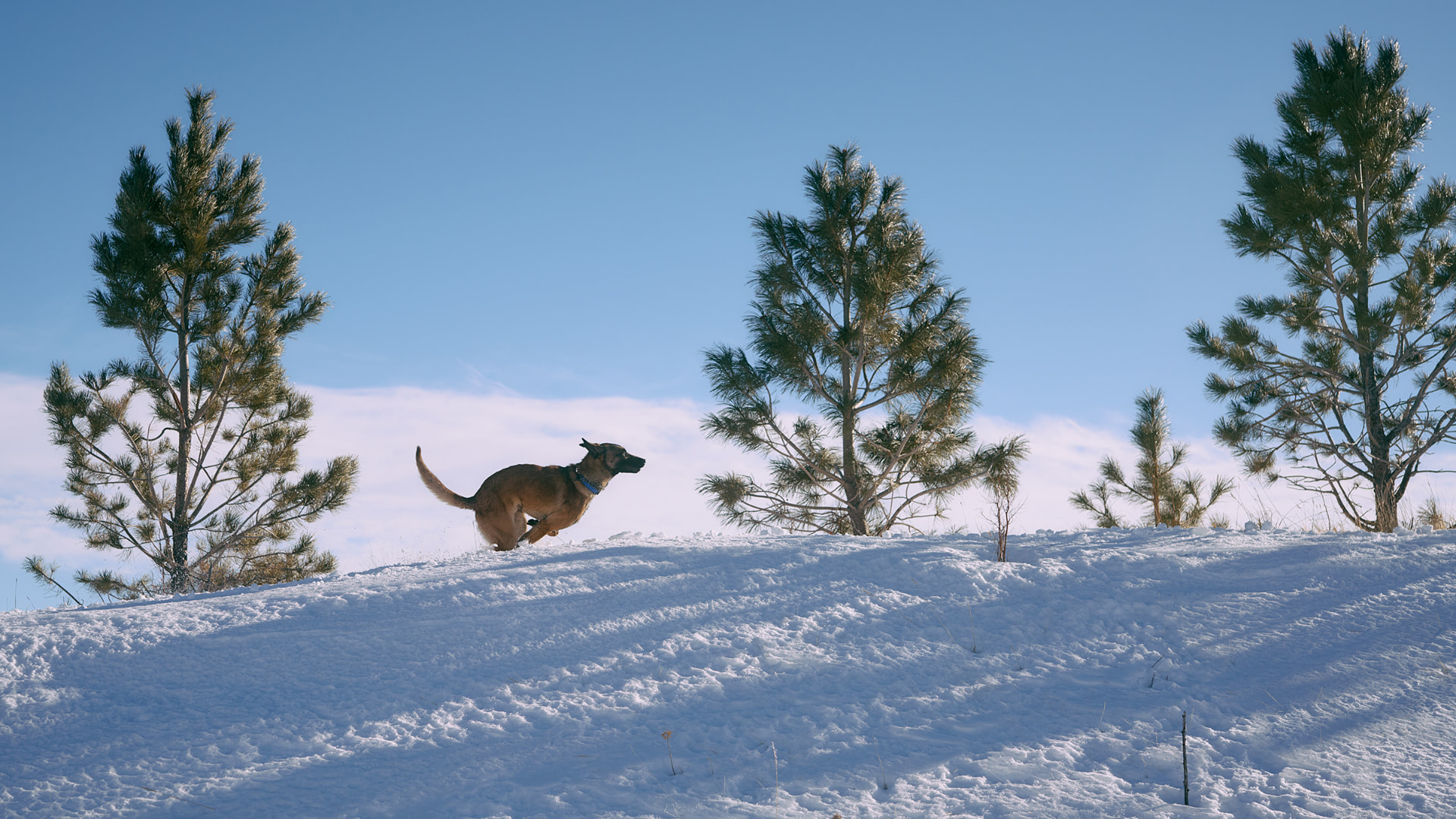
The enduring motivational power of purpose, recognition and connection – whether you walk on two legs or four – with the founder of Svalinn, Kim Greene.

Kim Greene’s business card boldly states “Alpha Female” on it. It’s a title she embodies daily leading Svalinn – a unique community of people and dogs working and learning together, deep in the beautiful wilds of Montana. Loyal to Greene’s vision, their efforts combine to meet a burgeoning global demand for military-grade family protection.
Greene’s first experiences of leading came decades ago, many miles from the sprawling Paradise Valley ranch that is today home to around 40 dogs and a team of 15 trainers at any one time. As a military and policy advisor in Kabul, she supported President Hamid Karzai in the run up to his election in Afghanistan. There, she was quick to recognise traits that would first help her to nurture and develop people – and later, little known to her at the time, dogs.
Everything fell into place when she volunteered to support a group of Afghan girls eager to build their confidence and run outdoors. “They needed someone to consistently show up for them,” Greene explains. “I realised early that leadership was about being present, positive and sharing a plan clearly.” As the geopolitical landscape evolved, so too did Greene’s vision for the future. In her leadership role at the United Nations, she focused on the reintegration of ex-combatants, while also offering support to local organisations with their security arrangements.
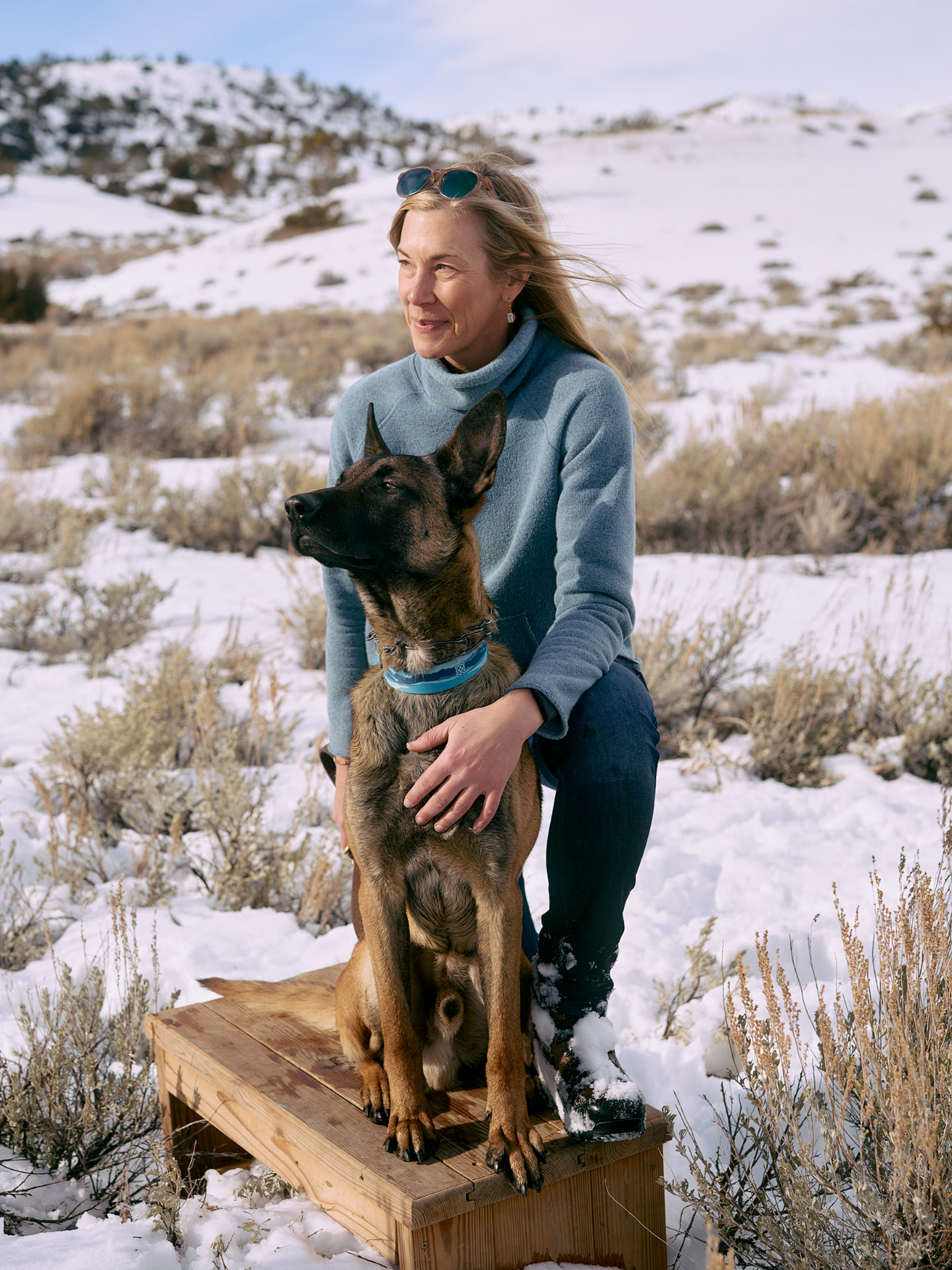
“Everyone was starting a security company of some sorts, thinking about how to transition their knowledge base,” says Greene. She was connecting with partners like The World Food Organisation and Doctors without Borders, and noticing an interest in “a softer kind of security, something with a female essence,” as she puts it. “Maybe you didn’t need a firearm, and the presence of a well trained, well heeled dog could have a similar effect, maybe even more deterrence overall. And they could integrate beautifully into whatever you were doing.”
After relocating to Nairobi with her young family – a city then notorious for its car-jackings – and surviving “a couple of close calls,” Greene recognised a personal need for enhanced security. Reluctant to carry a gun, she instead acquired a pair of Dutch shepherds and became the first, and perhaps best, customer for her fledgling enterprise.
This marked the beginning of Svalinn, named after a mythical shield in Norse lore, which Greene initially co-founded with her then-husband, who worked in The United States Army Special Forces. Over a decade ago, she transitioned from Kenya to her remote, expansive base in Montana, where she now leads the company independently.
I first discovered Svalinn through a flurry of media coverage, much of which centred around clickbait headlines focusing on the price of the dogs – around $150,000 a pup. Working with their own unique blend (the exact mix remains a closely guarded secret) of different breeds to create a desired disposition and “stability” of temperament, Greene and her team begin working intensively with the dogs from the age of six weeks.
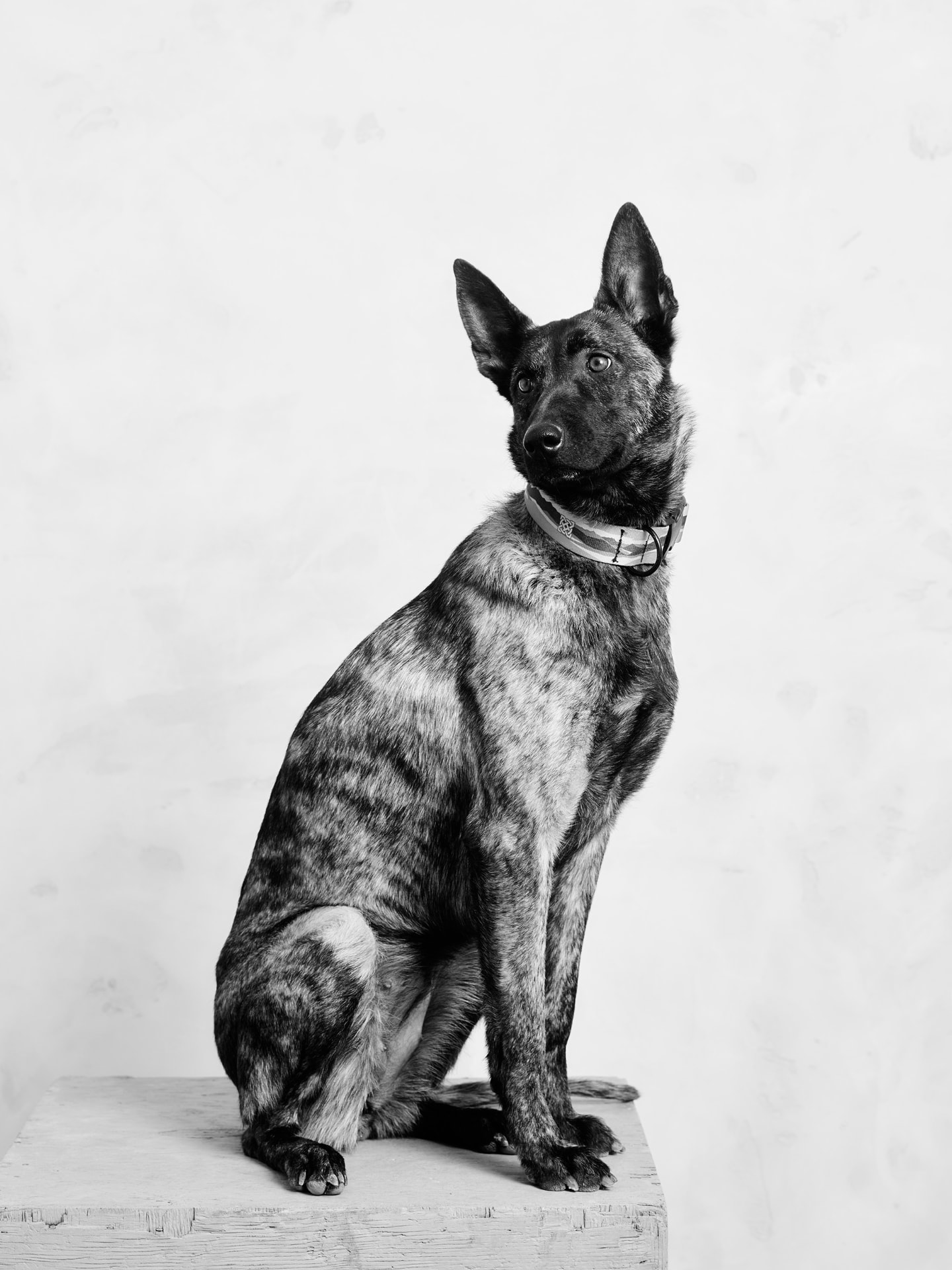
This all marks the start of a highly structured development journey, with adult dogs hand-delivered to their owners worldwide at around two to three years of age. With extensive handover training throughout, this is no easy process. No more than 20 dogs a year are placed with security-conscious families around the world – diverse in their geography and background, but united in the care with which they’re vetted as potential Svalinn clients.
At the facility, the dogs undergo rigorous training in an environment designed to challenge both their physical and mental abilities. There are no toys, no treats. But there is a dynamic obstacle course, reconfigured daily to prevent habituation, with challenging elements such as narrow balance beams to walk across and swinging tires to jump through. These obstacles are designed to enhance the dogs’ agility, strength and problem-solving skills. Greene readily admits she is a disciplinarian. Replicating the harsh conditions of the wild, the dogs are fed a diet of beef or raw elk meat served on the bone, and they grow up in a dirt-floored barn called “the pit”.
“I realised early that leadership was about being present, positive and sharing a plan clearly.”
Kim Greene
I was eager to learn more about the practical, behavioural aspects of Greene’s work – how she’s created a “learning environment” to train these loving (and, when necessary, lethal) life-partners, and where she sees the overlap between developing dogs and developing people.
So, what’s the most important behaviour for a human to bring into this deep, yet ultimately directive, relationship with such dogs? Just as with the schoolgirls in Kabul, Greene says, “It’s a trust building exercise from the word go. Of course, we start with good genetics and a predisposition to please. But it’s creating that predictability, and certainty in the mind of the dogs, through showing up repeatedly as a fair and positive presence in their lives.”
Warming to her theme, while her own closest canine companion sleeps peacefully behind her, she continues: “It’s about building deep rapport through noticing their unique characters, strengths and reinforcing their successes through lots of authentic praise.”
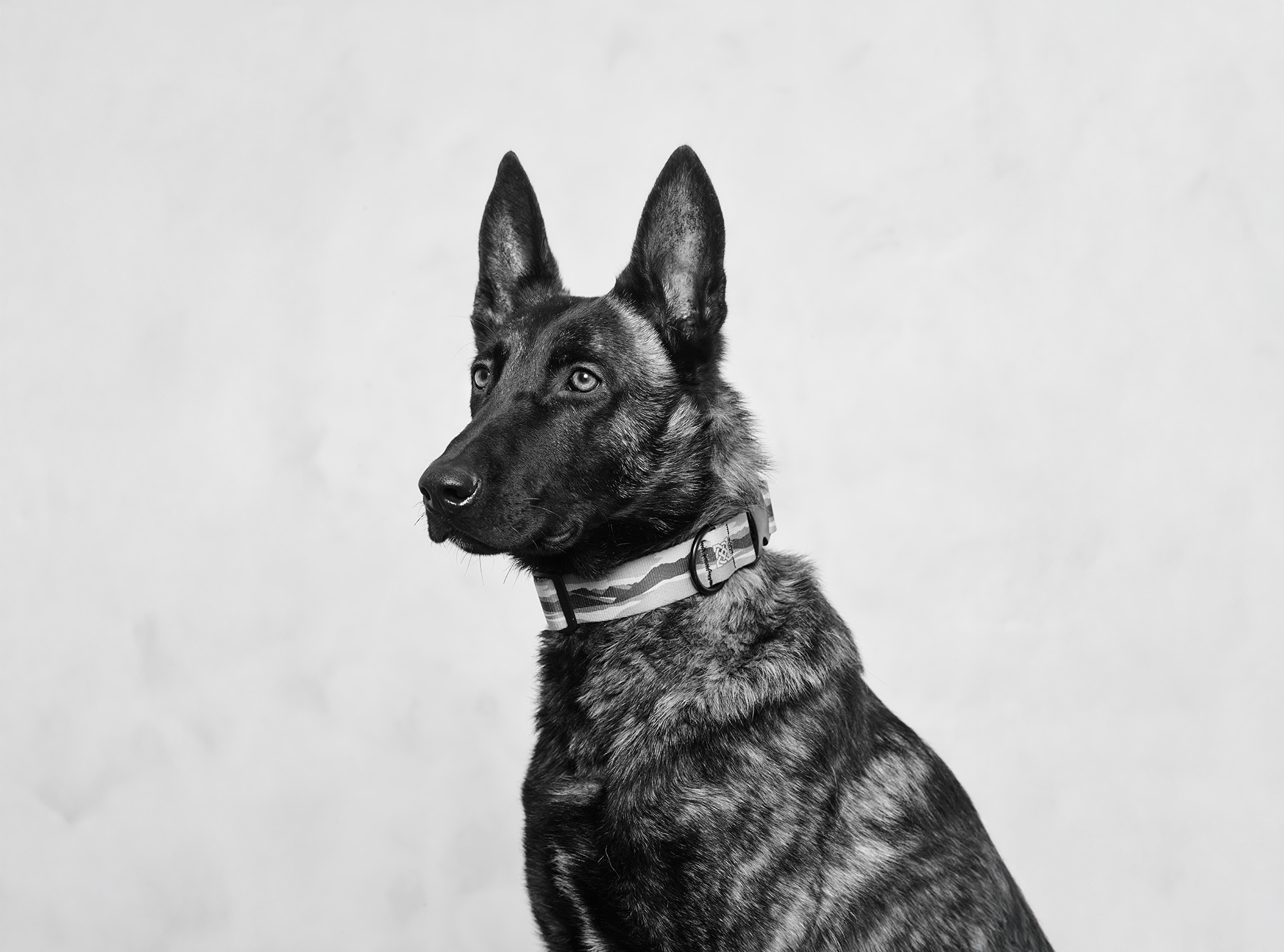
I point out that, aside from the genetic tinkering, these behaviours sound straight out of a manager’s guide to human motivation. Also likely featured in that playbook would be helping someone recognise and visualise the progress they’re making – seeing a streak and feeling motivated to extend it.
Does she think her dogs know that they’re progressing? Do they feel pride in their daily development? Greene points me towards some smart studies and “fascinating reading” on the topic of emotional intelligence, as well as around motivational theory in animals. Then she shares a more personal perspective, with a grade of positivity hard to imagine any human or animal resisting.
“I love seeing them have those ‘aha’ moments,” she tells me. “A four-month-old puppy might have one around mastering a core command. And then, later, it might be doing protection iterations at 11 months where there’s a bad guy in a decoy suit, and you see this dog who hasn’t quite gotten it yet. You know they’re going through the motions, but they haven’t connected the why. And then we go again and they feel it, and they get it, and I see the pride in their posture and their vibe.”
Alongside her conviction comes a note of caution. “Dogs are one of the few animals that leave their own kind to come and seek human attention. But, of course, they’re not little humans. It can be unhelpful to layer human characteristics on them.” What about the functional, reinforcing role of praise? Specifically, the practical ways in which extrinsic motivators are combined with a dog’s intrinsic desire to serve and please. According to Greene, consistent positive reinforcement of desired behaviours is “absolutely fundamental” in consolidating a dog’s development.
At Svalinn, rewards are received verbally and through body language. As Greene emphatically puts it, “It’s about exuding your sheer gushing pride for what they’ve just done”. The connection always comes before the direction, and there’s nothing quite like praise for building it. Sticking with positive praise, and shifting the focus to its impact on humans, we briefly discuss the Positive Psychology movement, pioneered by figures like Martin Seligman and Barbara Fredrickson. Their work explored how experiencing positive emotions can enhance resilience and contribute to overall well-being.
In her broaden-and-build theory, Fredrickson proposed that a 3:1 ratio of positive to negative emotions is the tipping point for “flourishing” – thriving in life with resilience and well-being.
Leaders are often encouraged to keep this ratio in mind when interacting with their teams. If they deliberately lean towards positivity and consciously recognise it in the feedback they give, it not only motivates but also makes having those more difficult conversations easier. We’ve probably all had that boss that only ever calls out what’s wrong, seemingly missing our success. It’s annoying. Biasing to positivity helps put these conversations in a wider context.
“I love seeing the dogs have those ‘aha moments’. I see the pride in their posture and their vibe.”
Kim Greene
So, what is the equivalent of a “difficult conversation” when it comes to developing dogs? How do you course-correct? In Greene’s playbook, there’s a helpful mantra. “We call it One Direction, One Correction. We’re very singular in what we’re looking to communicate with the dog at any one time. So if you’re seeing a behaviour that you really don’t want, it’s not a ‘big conversation’ and we don’t get emotional, angry or physically intimidating. It really is about getting curious and designing an exercise or intervention where you can tease out the behaviour you do want to see – and again, then reinforce that like crazy through praise.”
Good questions are key. “We need to ask ourselves: where’s the dog in their development horizon? Is he bored? What components can we shift? What do we need to do to make this dog successful?” Greene explains. “Luckily we can spot patterns, and blend intuition with our evidence. What’s ultimately needed is introspection from the human side, because it really does come back to enabling positivity.” Her take on this echoes the well-worn maxim in good management: it’s about catching someone in the moment they get something right.
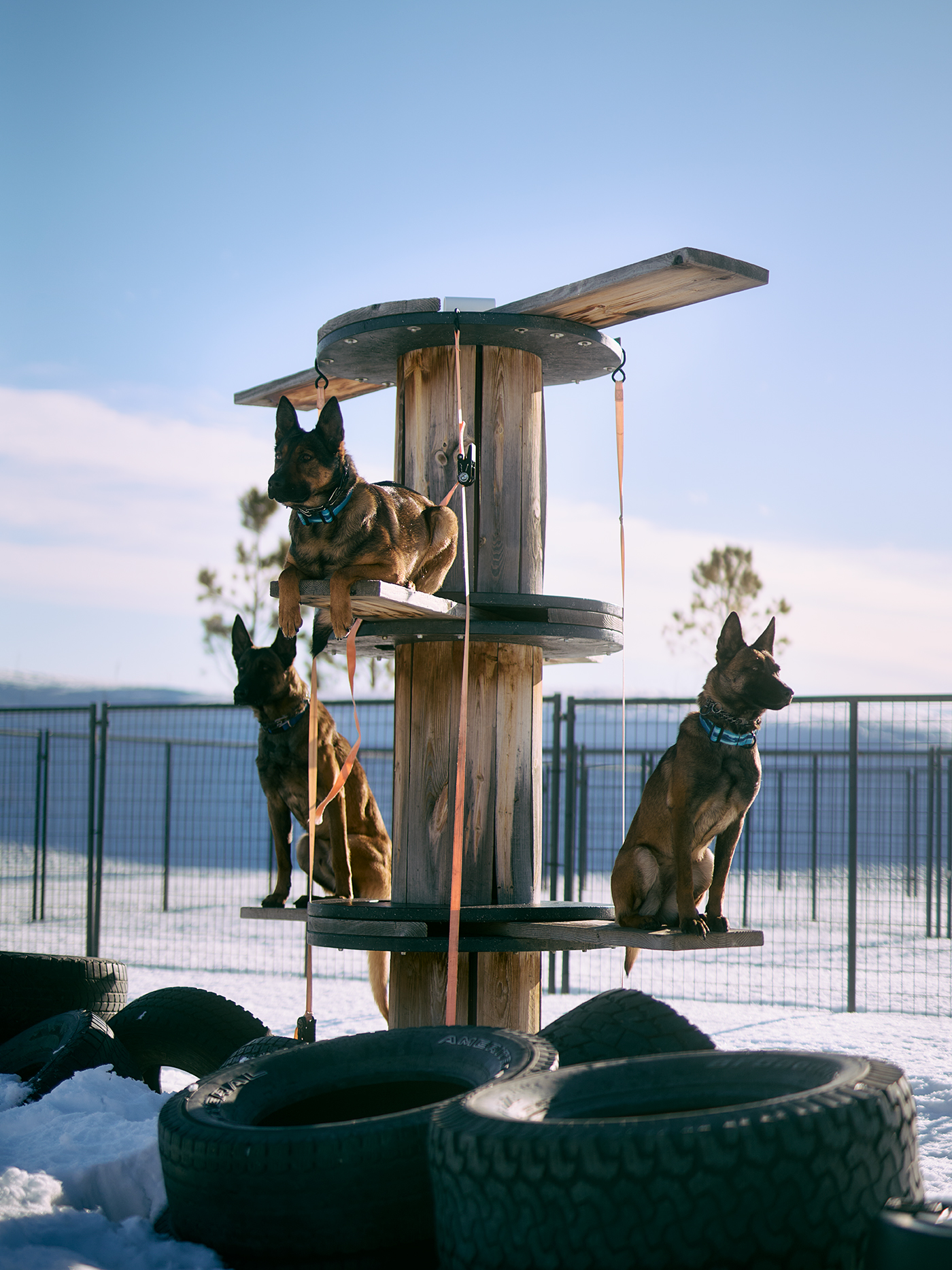
I wonder how conscious and intentional she is of this when it comes to her human pack – now a 15 strong crew, who are on their feet most of the day and work in bracing conditions (at the time of our conversation, several fresh inches of snow had just fallen). Beyond showing up consistently and positively, what else has she learned about getting them all pulling in the right direction?
Back to those intrinsic motivators, building a high-autonomy culture is key for Greene. She’s a big fan of Amy Edmonson’s work on psychological safety, and creating spaces where people feel they can authentically show up, challenge each other and learn through trial and error. “I’m trying to create a culture where everyone is comfortable asking questions,” she explains, “to describe their feelings and share what they’re noticing in their peers. Someone brand new into the team might observe something a more seasoned colleague might miss. There’s so much nuance in what we’re doing, so it’s got to be a space where we can be confident and clear critics of ourselves and each other. And it’s my job as a leader to model that.”
Leaders need a vision, too. What’s Greene’s? “The gold standard in human dog connection”, she shoots straight back. I’m curious about what she’s looking for when it comes to attitude and character in the trainers of the future drawn towards it? “Number one: self-awareness, and a well-developed muscle for reflection.” And she’s not really looking for people with prior experience training dogs either (although she does say that “horse people” tend to do well).
“We are training people in specifically what we do here, because we don’t want people bringing a different approach or methodology or reverting back to something that they learned elsewhere. But first up, we just need to see you on the ranch interacting with the dogs.”
As our conversation draws to a close, Greene’s phone begins pinging. It’s an owner, who, like all the other owners, gets round-the-clock support from the Svalinn team. This particular customer, she explains, is already planning for the future. Their first Svalinn dog is nearing nine years old, and they’ve recently returned to the ranch to choose a successor. “When you’ve lived with that level of safety,” she assures me, “it’s hard to imagine living without it.”
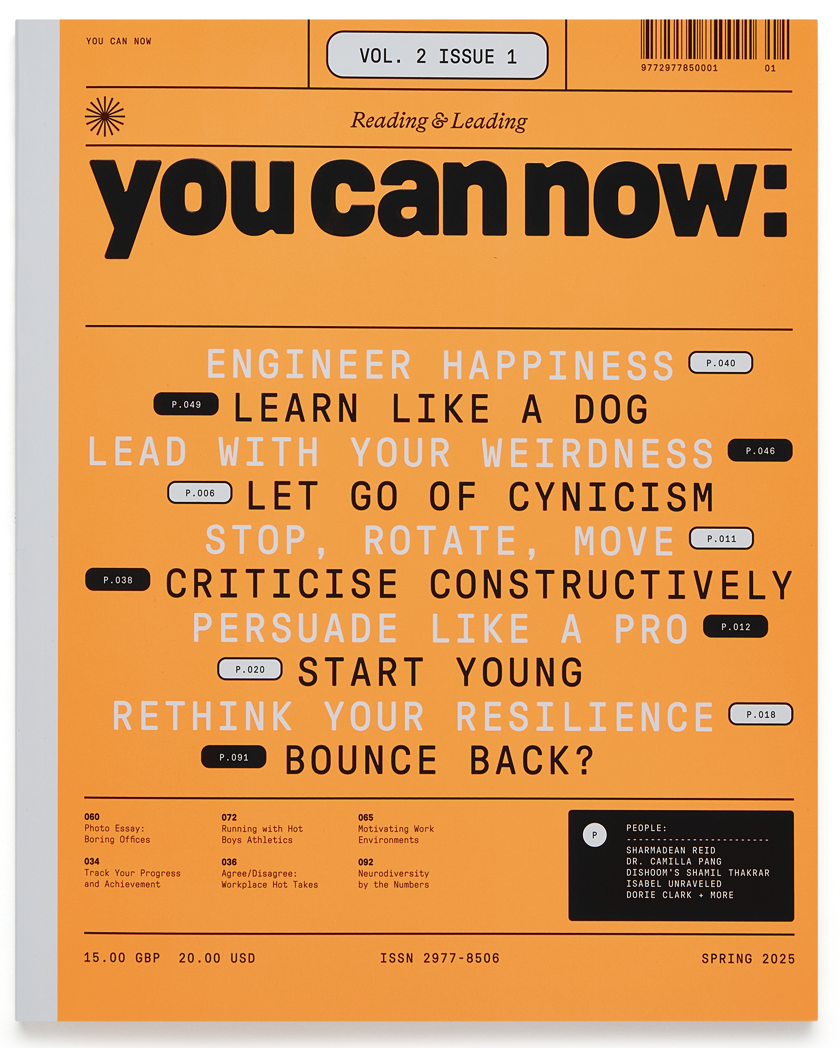
This feature on Kim Greene and Svalinn originally appeared in the pages of the Spring 2025 issue of You Can Now Magazine.