
ASK YOURSELF:
IS IT WORKING?
Exploring the problem with measuring change at work — what’s really shifting, what’s just activity, and whether we can trust how we measure impact at all.

IMPACT, NOT ACTIVITY

Asad Dhunna is the founder and CEO of The Unmistakables, a B Corp-certified consultancy helping organisations build more inclusive, culturally relevant businesses. In this conversation, he challenges the tendency to mistake activity for impact, arguing that meaningful change is revealed not by programmes delivered or dashboards completed, but by the decisions people make, the behaviours they demonstrate and what holds true when the pressure is on.

YCNWhen you look at culture change and inclusion programmes today, what do you think organisations most often misunderstand about impact?
ADThey confuse activity with tangible shifts. Programmes delivered, workshops completed, policies updated — these are all outputs and none of that guarantees relevance or changes behaviour in isolation. Impact is whether decisions, behaviours and outcomes look different in the real world. If the customer, the talent or the market cannot feel a difference, it is not impact.
YCNHow do you distinguish between real cultural or behavioural change and surface-level activity or box-ticking?
ADLook at what happens under pressure. Real change holds when it is inconvenient, commercial, or ambiguous. Box-ticking disappears the moment targets are at risk or timelines tighten. Another test is decision quality. Are different voices shaping outcomes, or are they just being invited into the room?
YCNA lot of inclusion work is inherently complex and long-term — how do you define success at The Unmistakables when the outcomes aren't always immediately visible?
ADWe look for directional proof, not perfect proof. Are leaders asking better questions? Are teams making different calls? Is risk being spotted earlier? Is relevance increasing with audiences that were previously missed? At the start of every programme we look at how we will measure impact to make sure that there is tangible proof at the end of what's changed, and where things need to go next.
YCNWhere do you see the biggest gaps between what organisations try to measure and what actually reflects progress? And what are the strongest indicators that change is actually sticking over time?
ADMost organisations measure representation and sentiment. Both matter, but neither tells you how work gets done. The gap is in behavioural data. Who gets heard. Who gets funded. Whose ideas scale. This is what we place at the heart of our Relevance Framework, which uses a set of tried and tested indicators that can be measured over time.
The strongest signals are consistency and transfer. Do behaviours show up across markets, leaders and moments of pressure? And do they persist when the spotlight moves on?
“Real change holds when it is inconvenient, commercial, or ambiguous.”
YCNAre there aspects of inclusion and culture change that you believe simply can't or shouldn't be measured? How do you handle that tension?
ADInclusion is one of those things where you don’t necessarily know how it feels unless you have felt the opposite — exclusion. That makes it more pertinent and important to certain groups, and creates a task for others who may feel that it is ambiguous.
Trust, psychological safety, cultural confidence can’t always be neatly quantified — you can sense them before you can score them, and right now many businesses are scoring low on emotive knowledge, and are prioritising what can be seen on a balanced scorecard or dashboard.
The discipline is to use multiple lenses. Quant where you can. Qual where you must. And stay honest about what the data cannot yet capture rather than forcing false precision.
YCNHave you seen examples where behavioural change programmes looked unsuccessful on paper but were actually driving meaningful change beneath the surface, or vice versa?
ADOften. We have seen programmes with flat survey scores where decision-making quality improved significantly. Leaders were challenging bias in real time, but employees had not yet updated how they rated the culture or hadn't yet seen the difference in the felt experience of what those decisions led to. The reverse is also common. Strong scores, but no shift in who gets opportunities or whose ideas land. It looks healthy on paper but lacks cultural integrity.
YCNHow do leaders shape the success or failure of behavioural change efforts?
ADLeaders set the conditions. What they prioritise, tolerate, and reward becomes culture. Their impact should be measured through their decisions and trade-offs, not just their intent or visibility. Are they backing different ideas? Are they interrupting bias when it costs them? Are they building teams that outperform because of difference, not despite it? If leadership behaviour does not change, the organisation will not either.
YCNWhat's the most common 'we thought this would be easy' moment you see in culture or behavioural change programmes?
AD“Just change the behaviour” is the classic trap. Organisations and leaders assume that once expectations are clear, people will follow. They forget how hard it is to form and reform habits. In reality, behaviour is held in place by incentives, habits, power dynamics and commercial pressure. If those do not shift, behaviour will not either. What sounds like a communication task is actually a systems change.
YCNIf you had to design a reality check for organisations before they launch a culture or behavioural change programme, what's the one question you'd make them answer honestly first?
ADWhat are you willing to do differently when this becomes inconvenient or commercially uncomfortable in the short term? That answer tells you everything. If the organisation is not prepared to change how decisions get made, who gets backed or how success is defined, then it is not a transformation that they're willing to take for long-term growth. It is short-term signalling that, over time, will diminish relevance.
Bio: As the founder and CEO of The Unmistakables, a B Corp certified consultancy, Asad Dhunna helps organisations embed inclusion and cultural relevance into strategy, brands and communications.
An Impact Illusion
In their widely-cited Harvard Business Review article, The Great Training Robbery (2016), Michael Beer, Magnus Finnström and Derek Schrader argue that organisations often spend vast sums on leadership and training programmes but see little return in actual performance or behavioural change. The core issue isn’t usually the quality of training itself, but what happens afterwards: employees return to systems, incentives and leadership behaviours that don’t support the new learning. As a result, people often revert to old ways of working. The authors argue that training alone rarely “drives” change unless it is embedded in broader organisational and cultural transformation.
BEYOND LEADERSHIP THEATRE
James Elfer is founder of MoreThanNow, a behavioural science consultancy that applies experimental research to leadership and organisational change. In this conversation, he argues that too much leadership development is judged by how much participants enjoy it rather than whether anything actually changes — making the case for stronger evidence, better measurement and testing what really works.

YCNWhat would you scrap first when it comes to leadership or behavioural change programmes today? And what would you replace it with?
JELeadership programmes are especially hard to evaluate because I’m not convinced they’re really intended to improve leadership. Or at least, that outcome seems less important than making sure leaders have a nice time and think well of the people who designed and facilitated the experience. That might sound a bit cynical, but look how we measure success. We ask leaders whether they thought the programme was good, and maybe at a push, whether they intend to do anything differently as a result. I’d scrap all those self-reports, and replace it with feedback from the leader’s team. I want to know if their experience of working life is changing for the better. If we used that metric as our primary measure of success, I’m sure leadership initiatives would look very different!
At MoreThanNow, the focus is less on “transforming” leaders in offsite sessions and more on shaping behaviour in real work moments. Small actions — how meetings are run, one-to-ones are framed, or decisions are made about hiring, rewards and investment — have a big impact on teams. The key is intervening at the point of action, when leaders are actually making those choices.
YCNAt MoreThanNow, how do you define success?
JEWe don't really define what success looks like — that's up to our partner and their change strategy. But we do help them develop a more comprehensive measurement approach, focusing on a combination of how people feel (through sentiment data), what people do (through behavioural data), and what people achieve (through performance, reward and KPI data). Leaders often need to be pushed to measure what they really care about. We might start with an organisation asking us to improve psychological safety, which can be measured through an employee survey. But is that really the end goal, or do they want something more? You might not be able to get all the way to performance metrics, but you can include behavioural measures like share of voice in meetings, the level of challenge in a room, or a team's willingness to set ambitious goals that are likely to fail.
“If you claim ‘transformative change’ based on enjoyment, you’re kidding yourself.”
YCNWhat does credible measurement look like in your world — what data do you trust, and what data do you tend to ignore?
JEI’m not sure I would ignore data, but I do think we need to be better at putting it into a hierarchy and understanding its limitations. I think AI is a great example of this at the moment. It is designed to be sycophantic, so people like it, but that personality leads to all sorts of bad outcomes, like dependency or even delusional thinking.
At MoreThanNow, we are especially interested in causality — so trying to isolate the effect of an intervention on the outcomes we care about. So that means developing a comprehensive measurement strategy, like I mentioned earlier, and then typically testing our efforts to improve things with a Randomised Controlled Experiment. This is a similar method to a clinical trial in Life Science or A/B testing in technology, and what I really want to see more of in the world of work.
YCNHow do you separate genuine behavioural change from short-term enthusiasm or 'survey theatre' after a programme?
JEI try not to be dismissive of any measures, just to acknowledge their limitations. In the main, it’s good that people enjoy HR programmes or initiatives, but that doesn’t tell us much about their subsequent behaviour. If you start making big claims about that leading to “transformative” change, you’re kidding yourself, and/or others, and that’s not good.
But we also have to be pragmatic. For example, it’s incredibly hard to measure the causal effect of a cultural intervention on the performance of a knowledge worker. We can only do our best. I want to see changes in validated scales like psychological safety over time, and some evidence that these feelings are shifting behaviours that we expect will lead to better decisions or business outcomes. We don’t want to let perfect get in the way of better.
YCNYou talk about transforming employee experience and culture by design — what are the most common unintended consequences when organisations try to engineer culture?
JEWell, I think an organisation absolutely can engineer culture — I like that phrase! — but I think they often try to do it by shouting what they want the culture to be very loudly at their employees. The biggest mistake is when the words they shout such as collaboration, inclusion or growth, so clearly misalign with the reality on the ground. I think this is where culture change efforts can move from meaningless and ineffective to actively harmful. It breeds cynicism in employees, and rightly so.
YCNTo what extent can leadership impact actually be isolated from other forces in an organisation like market conditions, management changes, internal politics?
JEI’m ambitious here. There are very few efforts to deploy credible causal research on leadership initiatives within large corporate organisations, despite this being a multi-billion-pound industry. We can do much better if our aim is to create better leadership in our organisations (an open question!).
There are limitations, of course. The sample size of an executive board means we will never be able to deploy causal research in a single organisation, but we absolutely can — and do — in management populations. This becomes particularly exciting when we can link it to performance measures, such as in sales, customer, or operations teams, directly isolating leadership behaviour from the commercial goals of the organisation. The aim is not perfection, but to raise the evidence bar from where we are today, and HR teams have every opportunity to credibly isolate their impact on real commercial outcomes on the frontline.
MoreThanNow has run causal studies on management at large organisations including AstraZeneca, Vodafone, Ericsson, Sandoz and Nationwide. All are public and published in Harvard Business Review, so I’d encourage interested readers to take a look
Bio: James Elfer has a master’s in behavioural science from the London School of Economics and spent 10 years in people and consulting before founding MoreThanNow in 2016. MoreThanNow uses experimental research and academic collaboration to improve leadership and workplace culture.
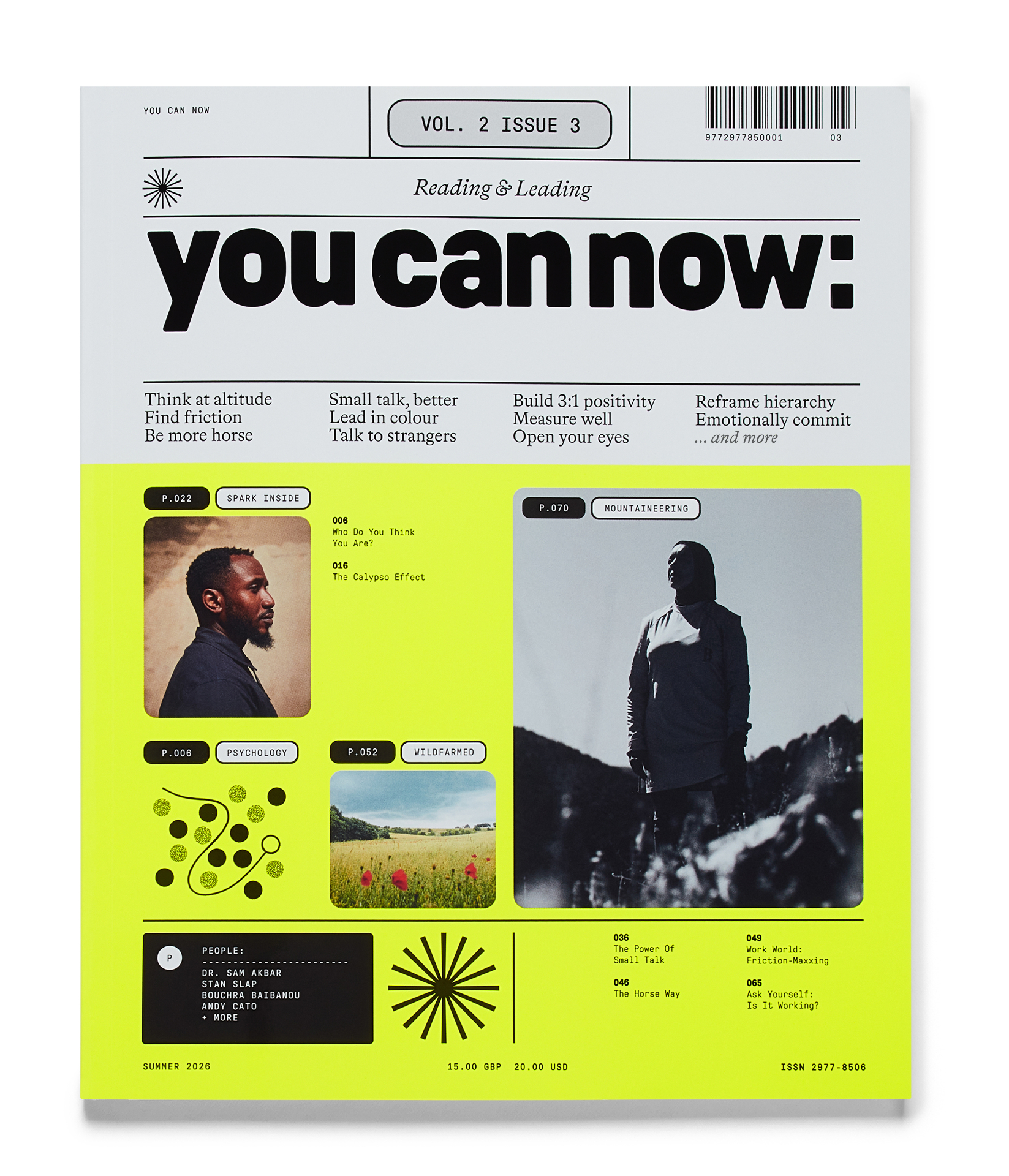
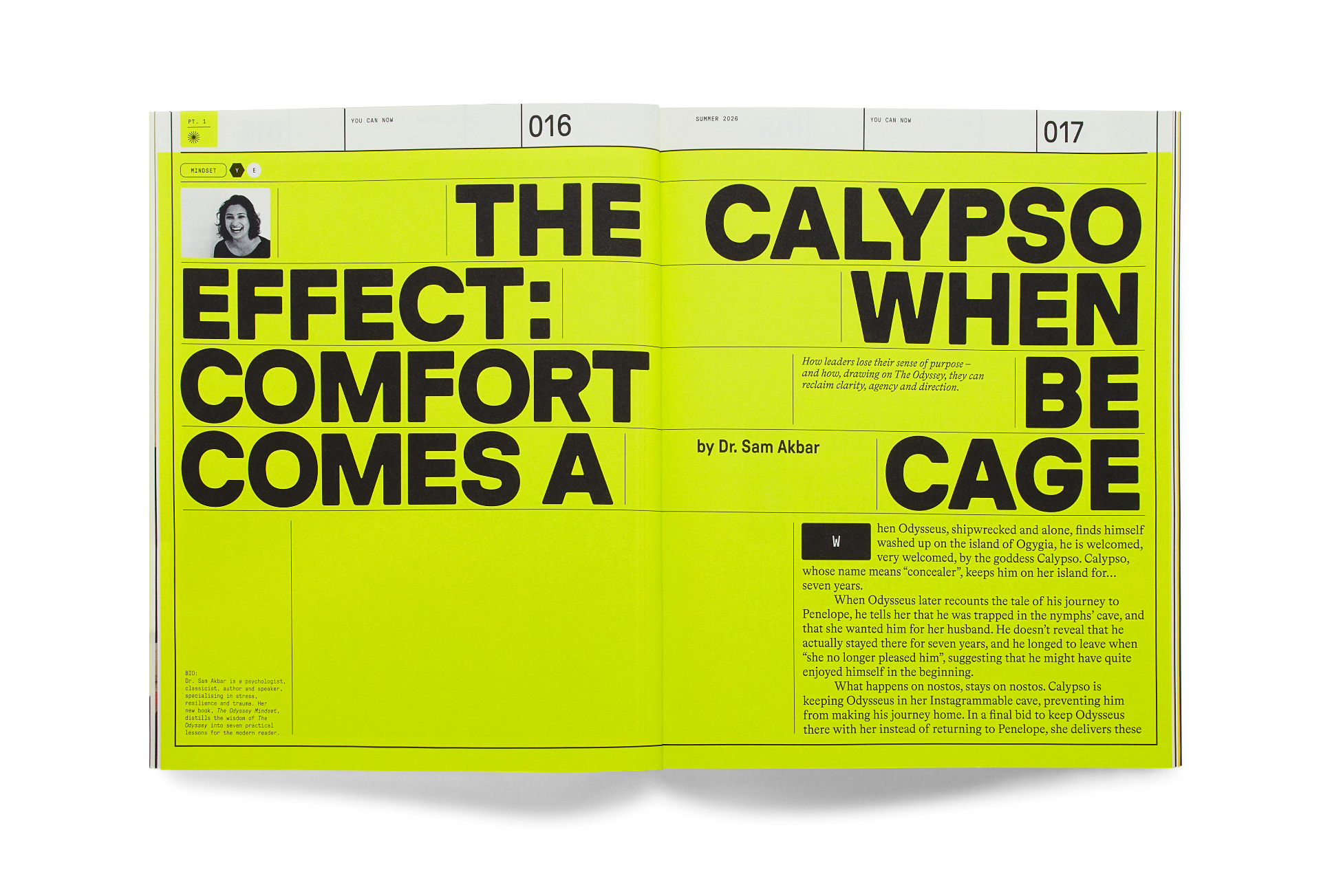
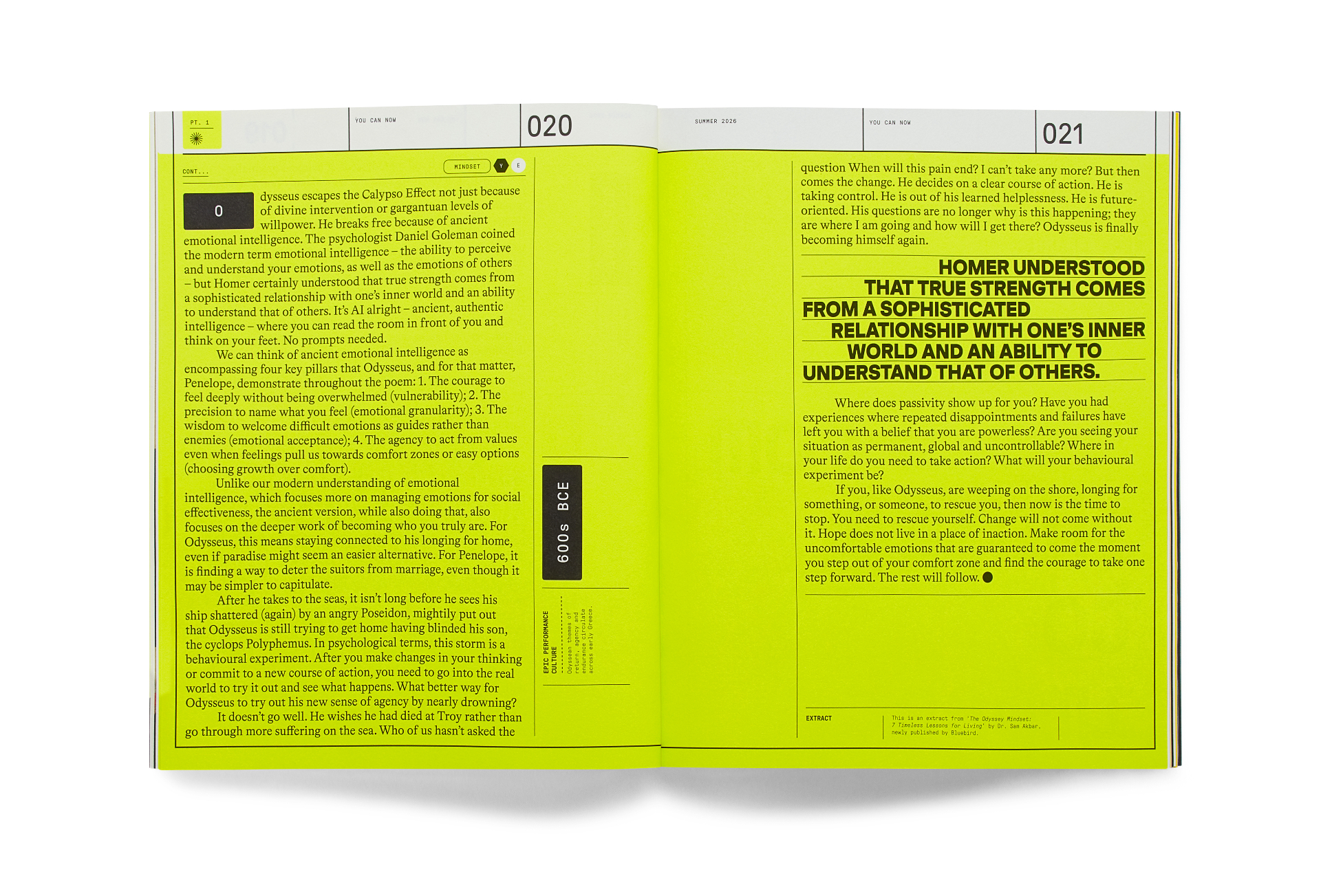

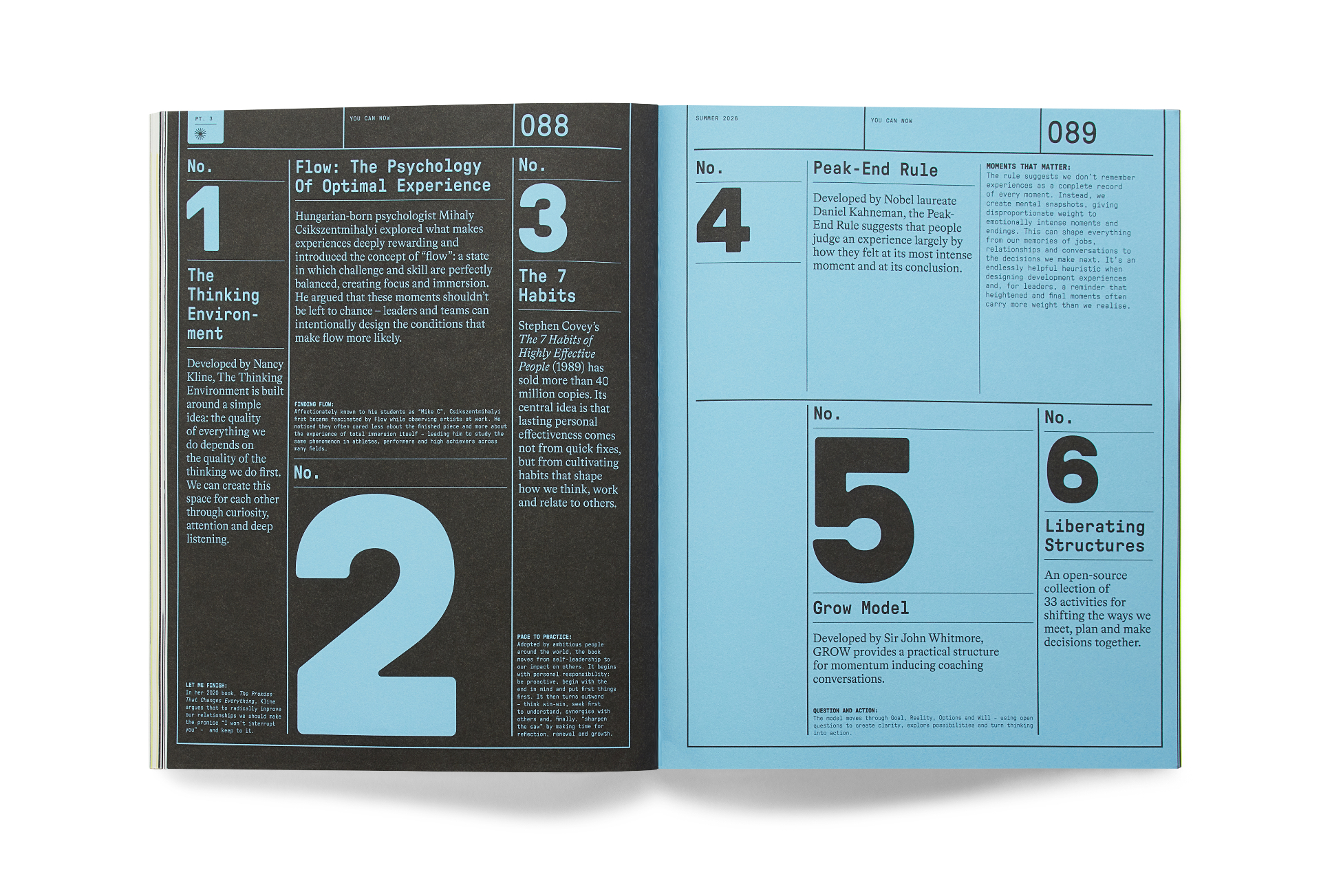
This two-part feature originally appeared in the pages of the Summer 2026 issue of You Can Now Magazine.