
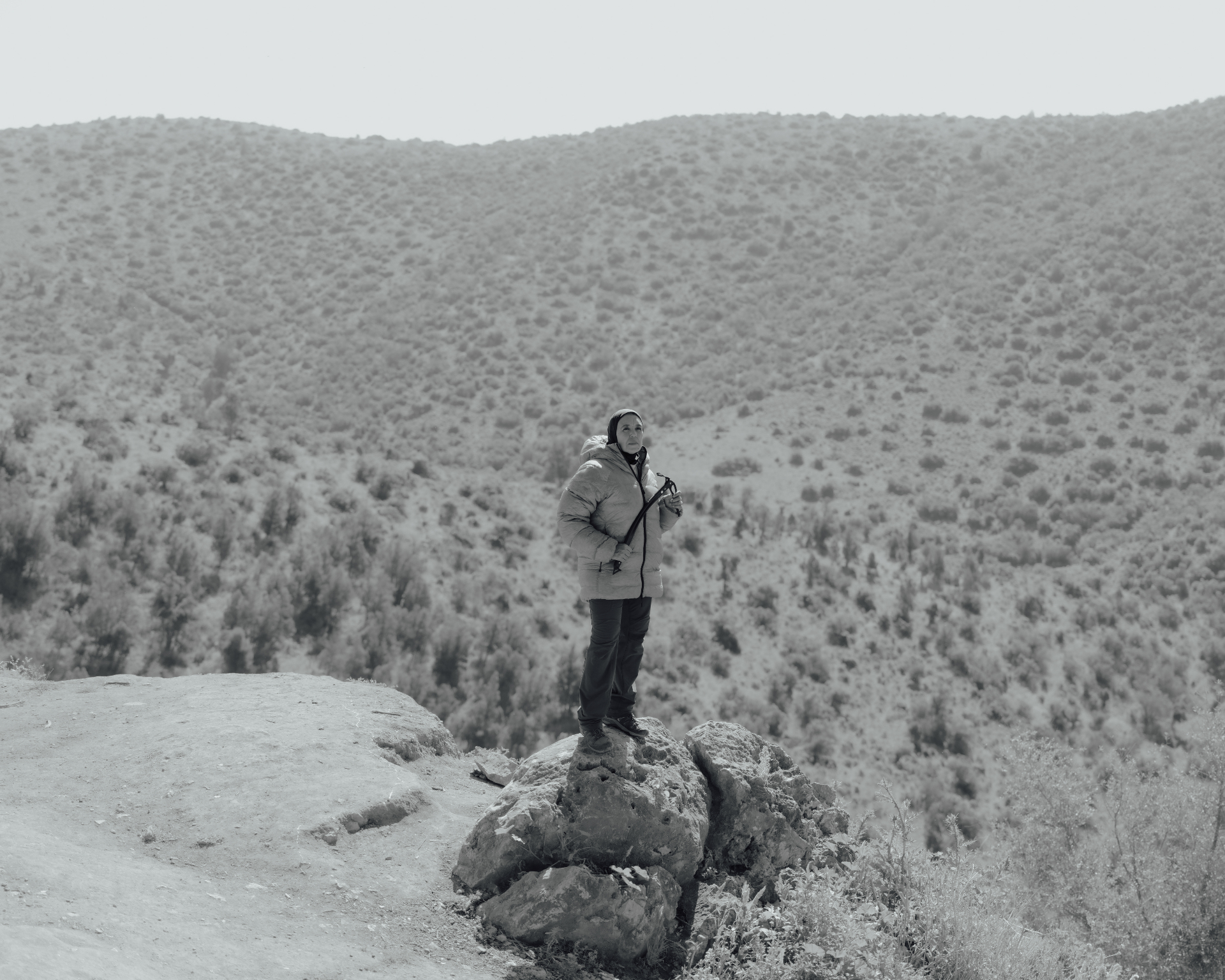
From Rabat to Everest to Kilimanjaro and beyond, the record-breaking Moroccan mountaineer Bouchra Baibanou talks about turning resilience and self-belief into a system for leadership at the world’s highest altitudes.

Bouchra Baibanou’s life is best understood as a steady escalation of difficulty. From her home in Morocco’s capital, Rabat, where she’s taking a break between training sessions when we speak, she moves between two worlds that rarely overlap: the grounded rhythms of daily life and the unstable, high-risk environments of the world’s highest mountains. The latter is no longer an escape but the centre of her working life — one that has made her the first North African woman to complete the Seven Summits, and a mountaineer still intent on pushing further.
She resists the idea that her story begins with ambition. Instead, she traces it back to something quieter: curiosity. “I discovered my hobby to just work, to do some trekking in camp,” she says, recalling early exposure to hiking during summer camp. At that stage, mountains were simply places to explore rather than objectives to conquer. Even her first serious climb, in Morocco’s Atlas range, was improvised rather than planned. “I didn’t even know the way to the mountain,” she says. “I didn’t have any equipment at all. I just took one jacket from a shop.” She travelled by taxi, asked for directions and set off with a friend, without guides or technical training. “I quickly reached the summit. I was very, very happy. And then I discovered that this is something I love to do all my life.”
What followed was not an abrupt reinvention but a gradual recalibration. Baibanou continued her studies, built a professional life, married and had children. Climbing remained something she pursued alongside everything else — an activity that grew in importance without immediately displacing the rest. “I continue just for fun, just for me, just to discover my country, to discover other mountains,” she says. Over time, however, that balance shifted. She founded a trekking association, began organising hikes and moved from informal exploration into structured expeditions.
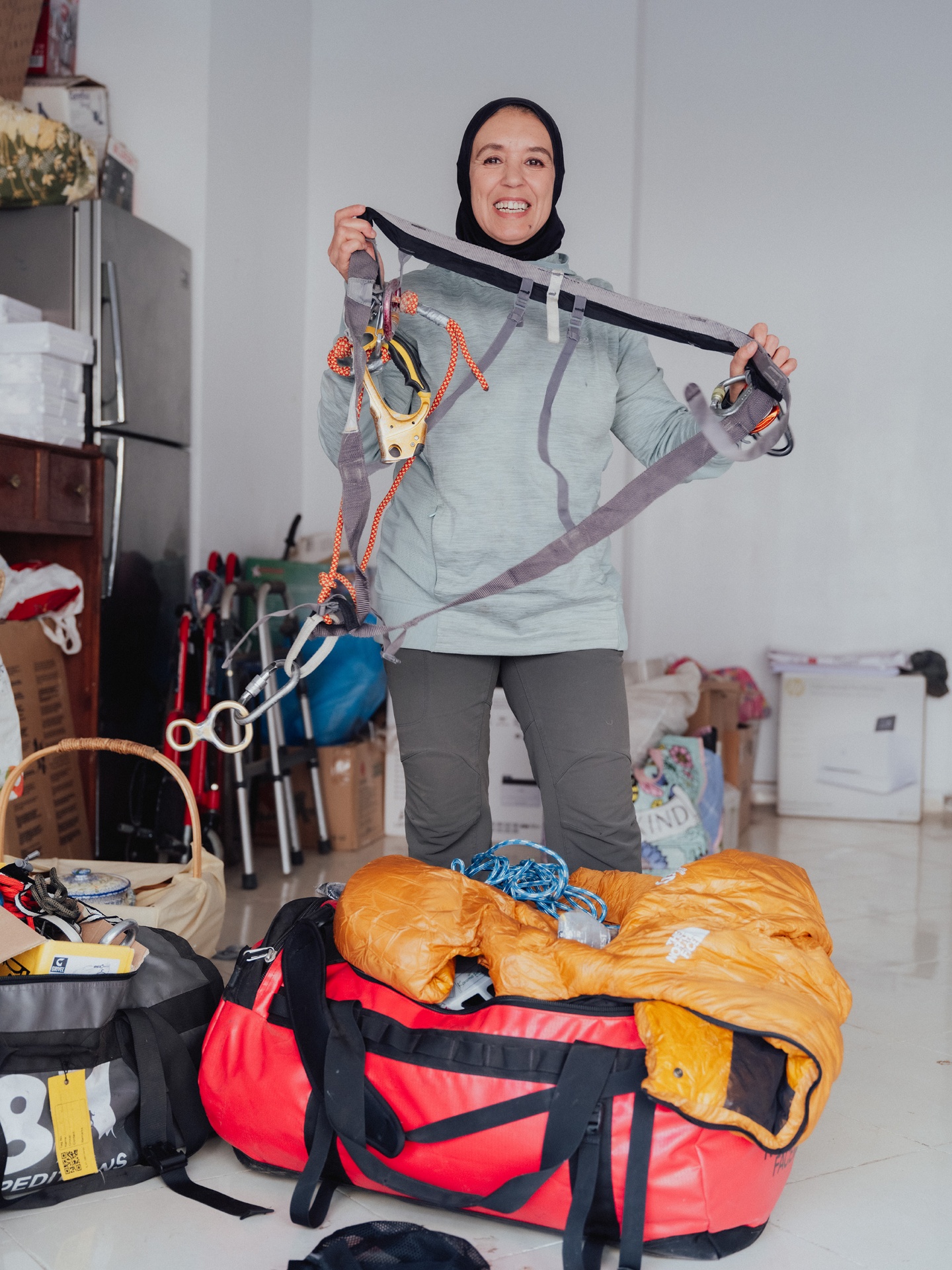
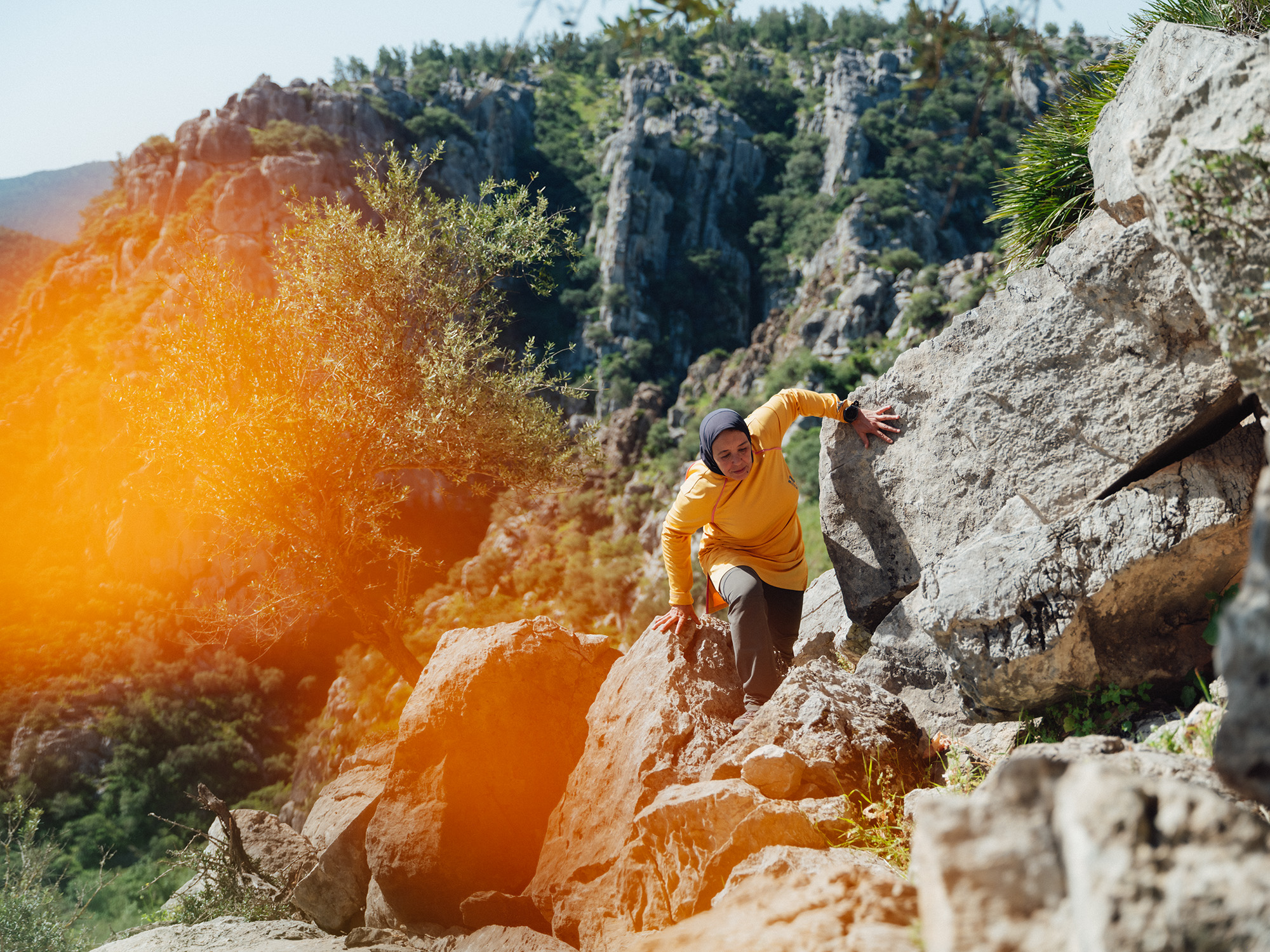
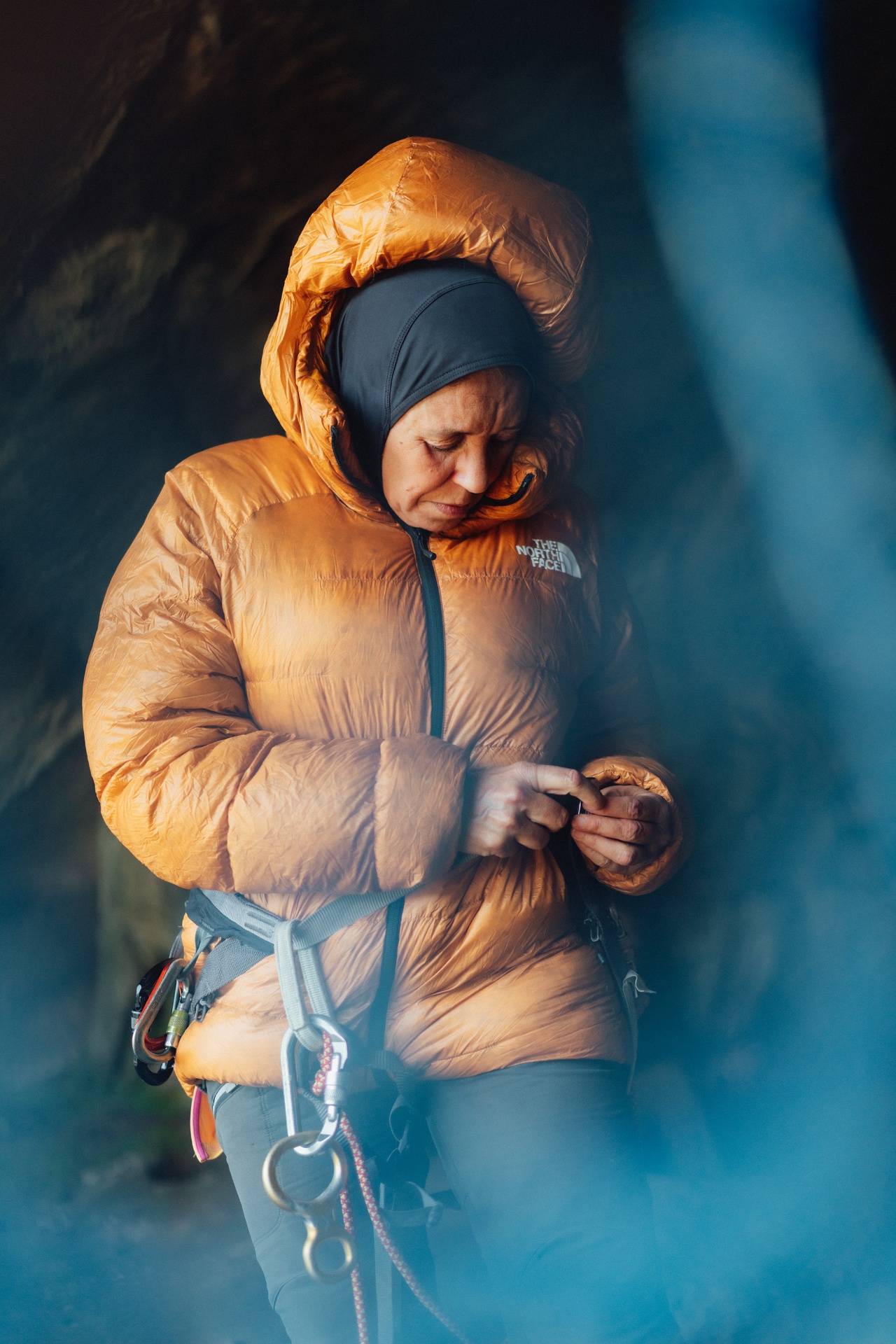
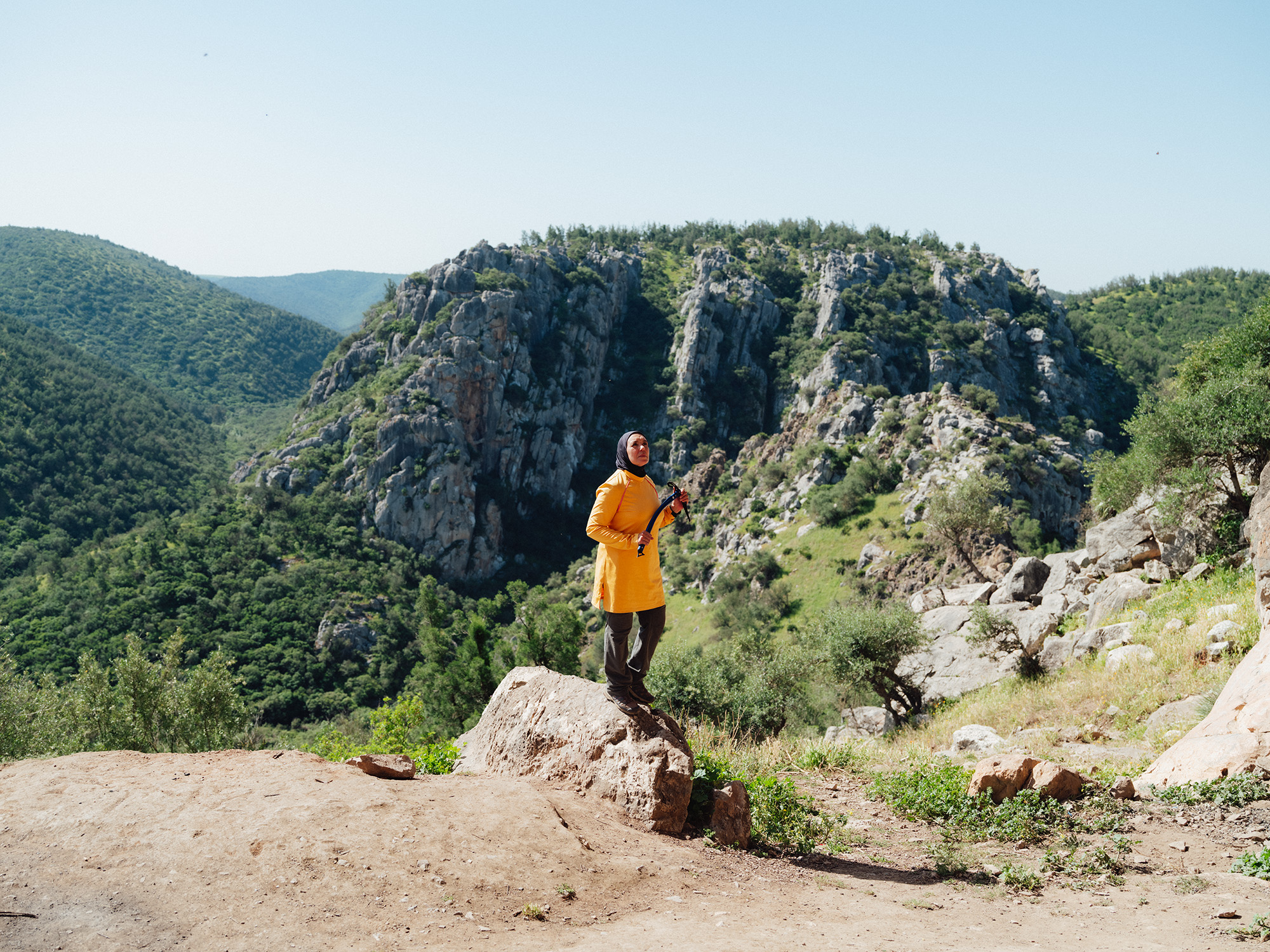
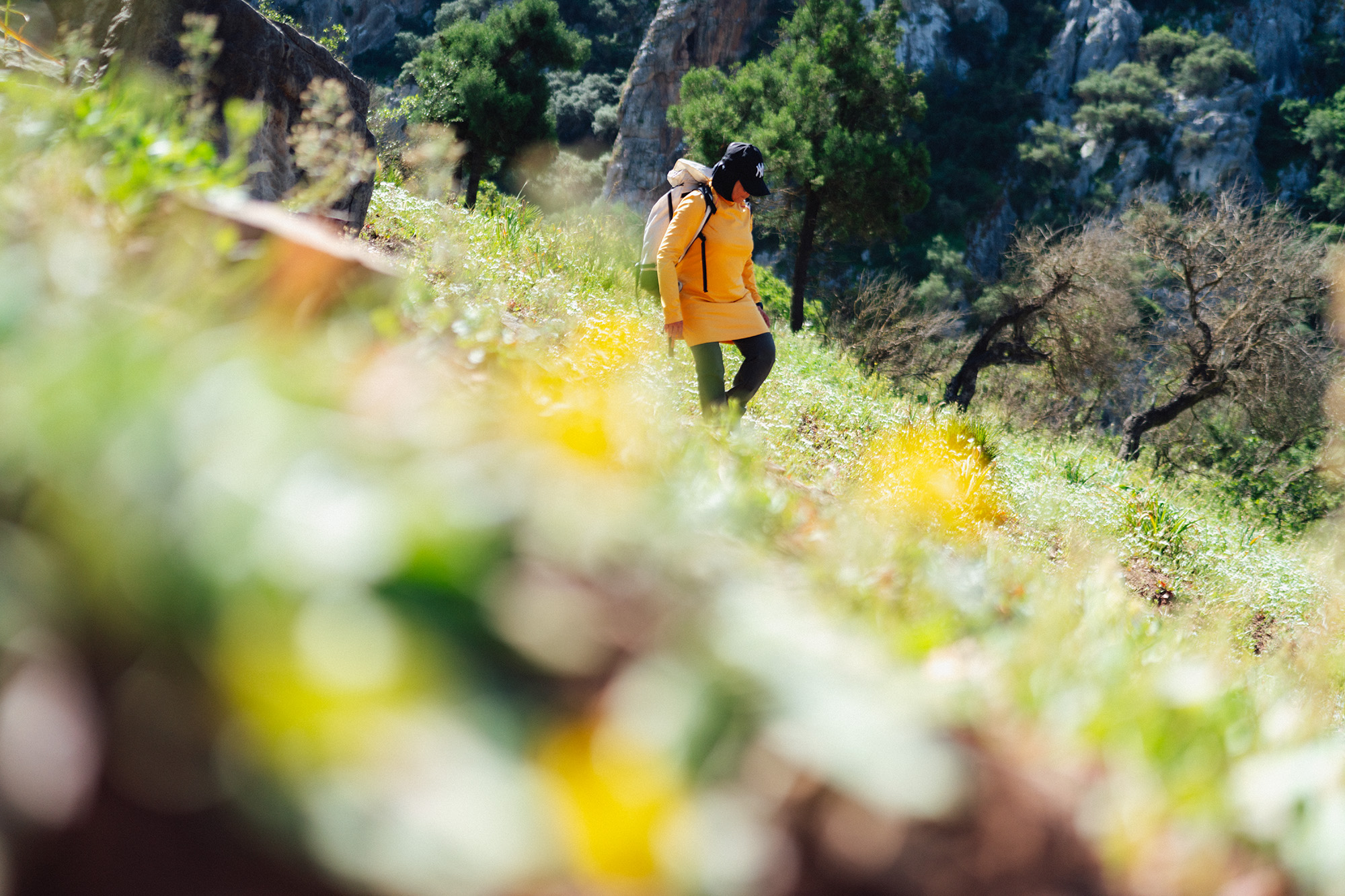
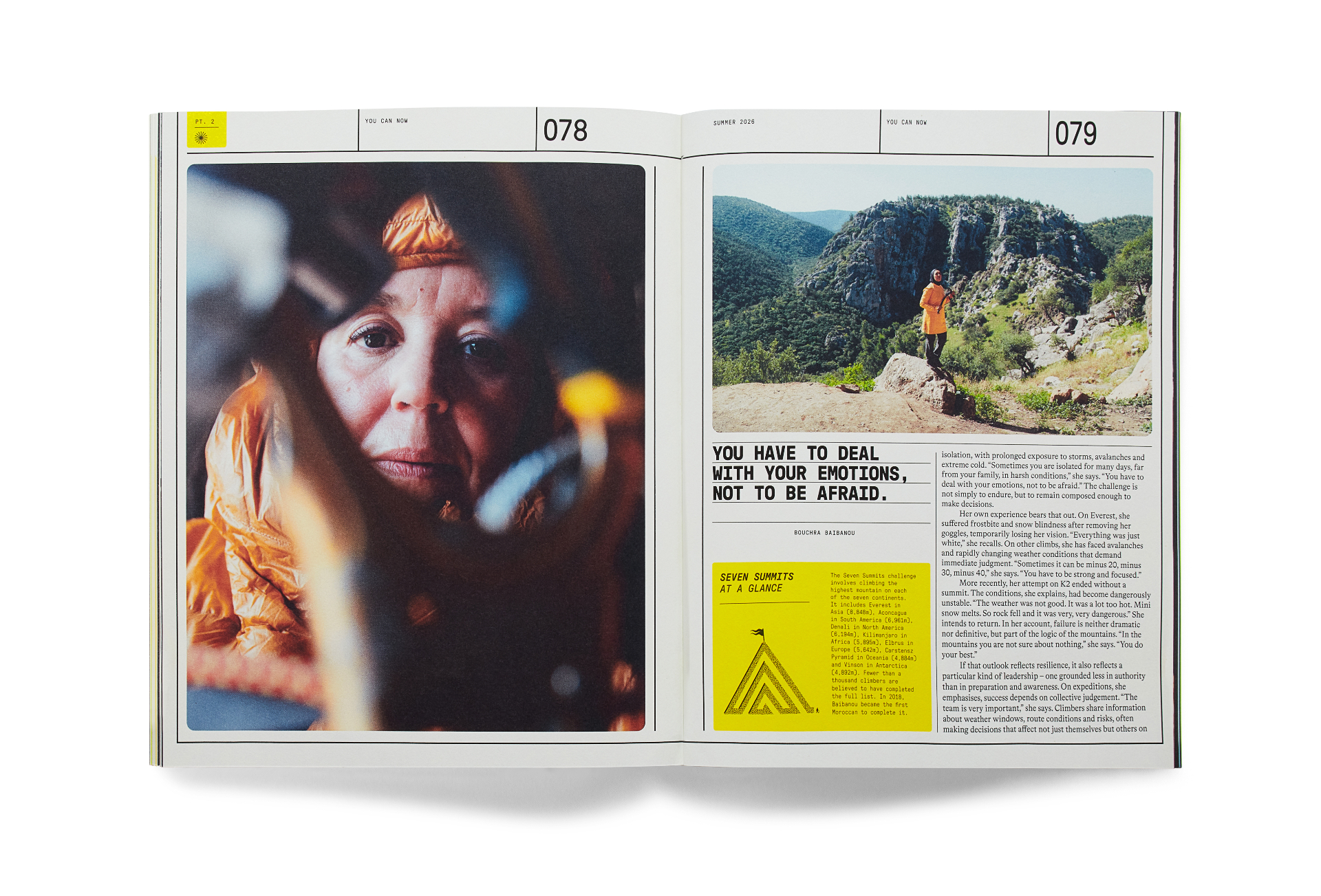
PHOTOGRAPHED IN AND AROUND RABAT, BAIBANOU’S HOMETOWN – WHERE THE HIGHEST NATURAL ELEVATION BARELY REACHES 160 METRES ABOVE SEA LEVEL – SHE IS FAR FROM THE HIGH-ALTITUDE ENVIRONMENTS THAT DEFINE HER WORKING LIFE.
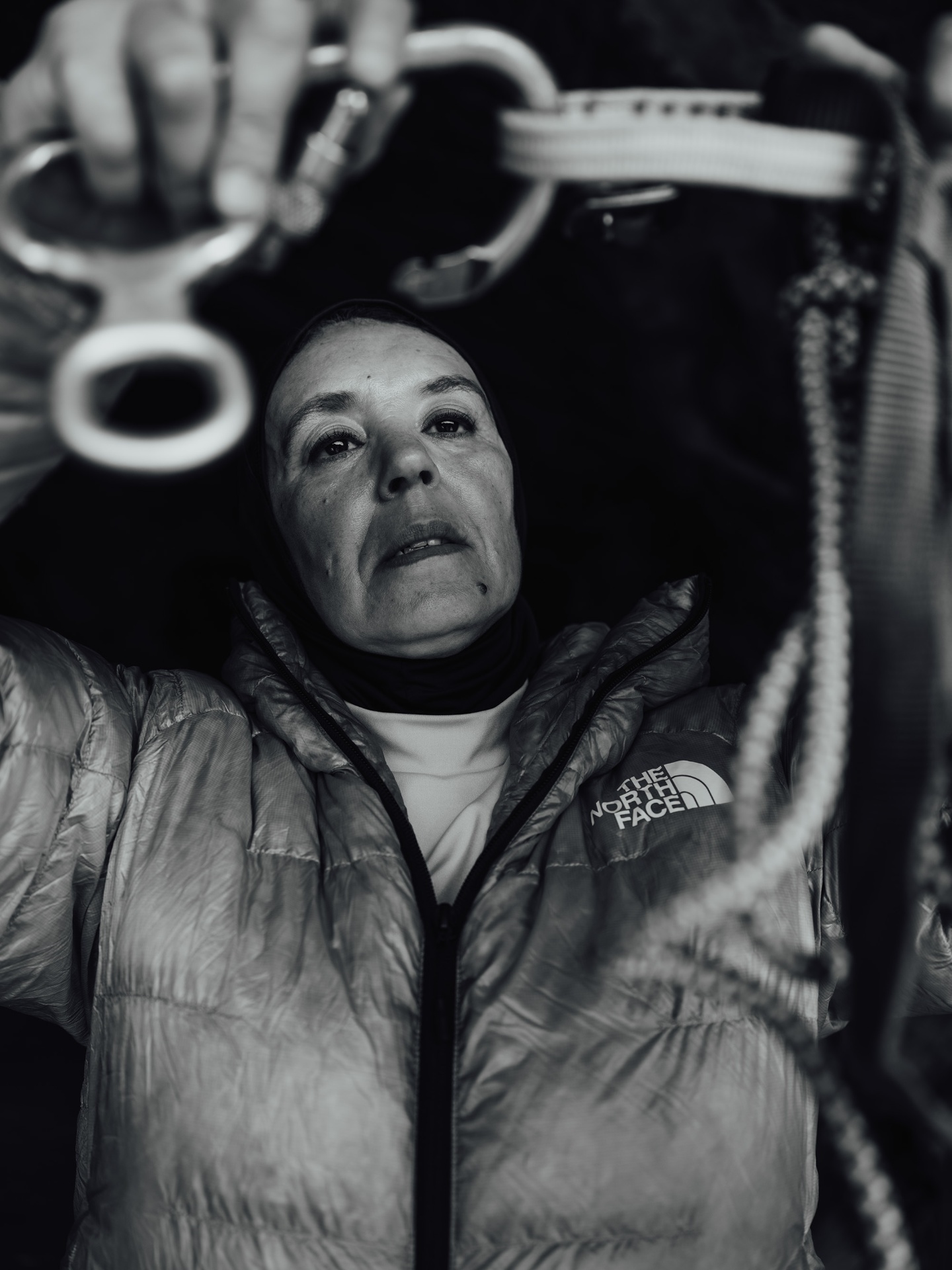
The transition into high-altitude mountaineering introduced a different order of challenge. It was no longer simply a question of physical effort, but of coordination: funding, logistics, training cycles and long-term planning. “I have to find a solution,” she says of the moment she began thinking in those terms. “I have to do a lot of training. I need to do logistics. I need to look for sponsors, which, as a woman in Morocco, is maybe the hardest part.” The Seven Summits project, which she completed in 2018, became the clearest expression of that mindset — an undertaking that required years of sequencing and preparation as much as endurance.
Her progression was methodical. Kilimanjaro in 2011 was followed by Elbrus, Aconcagua, Denali, Carstensz Pyramid, Everest and finally Vinson in Antarctica. Each ascent brought new variables: altitude, extreme cold, technical terrain and increasingly complex decision-making under pressure. By the time she reached Everest, she was operating in conditions where survival depended as much on mental clarity as on physical strength. “You have to be very strong mentally to support all of the conditions you face,” she says.
That emphasis on mental strength is not rhetorical. Alongside daily physical training — cardio, strength work and endurance — she has built a system for managing stress and uncertainty. “I try to be focused, to free my mind,” she says. “Not to think about nothing.” Meditation and yoga form part of that routine, but so too does a more direct form of self-instruction. When doubt sets in, she relies on repetition. “I start telling myself, I am strong. I am very okay. I can do it. I did it before, so I can do it again.”
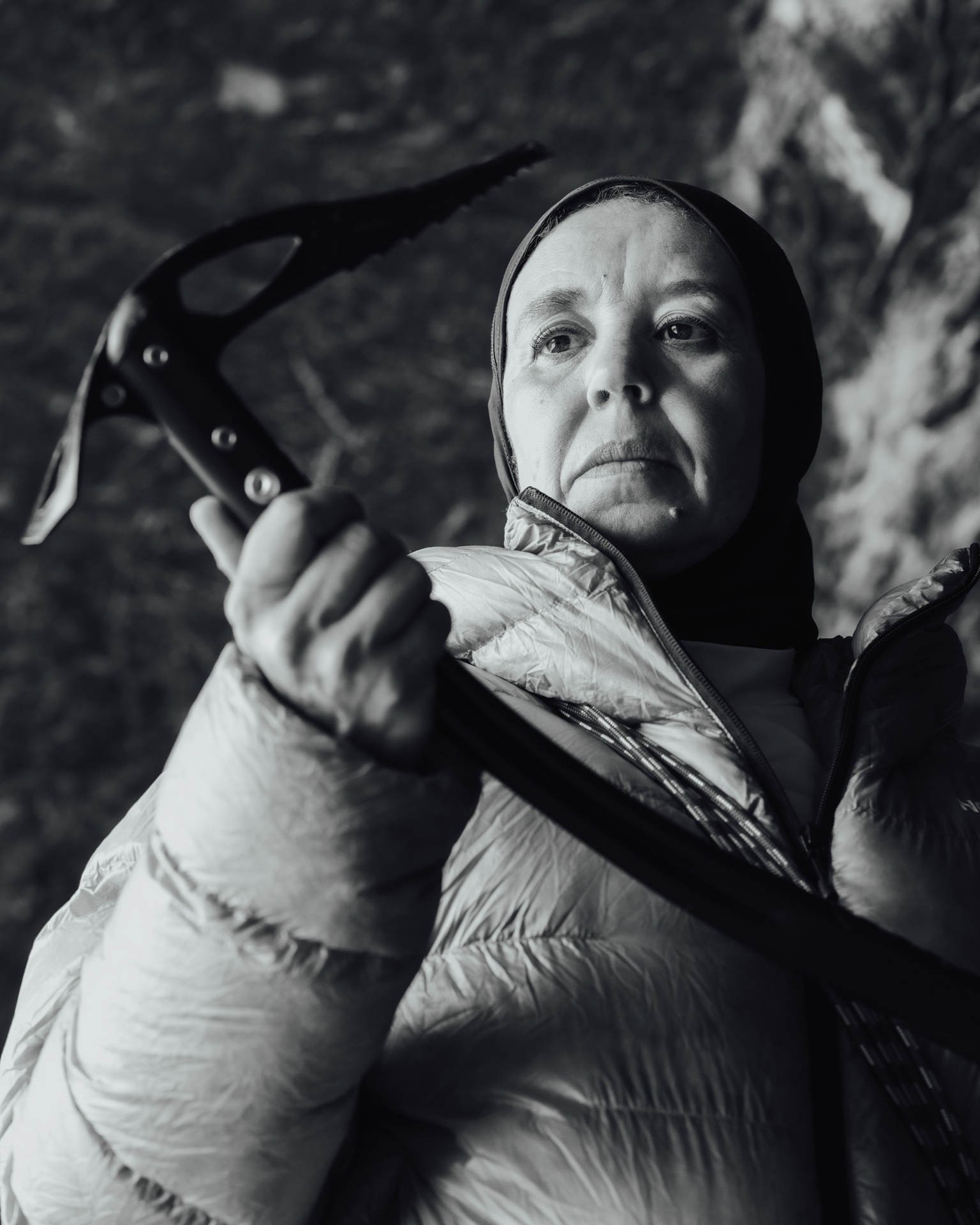
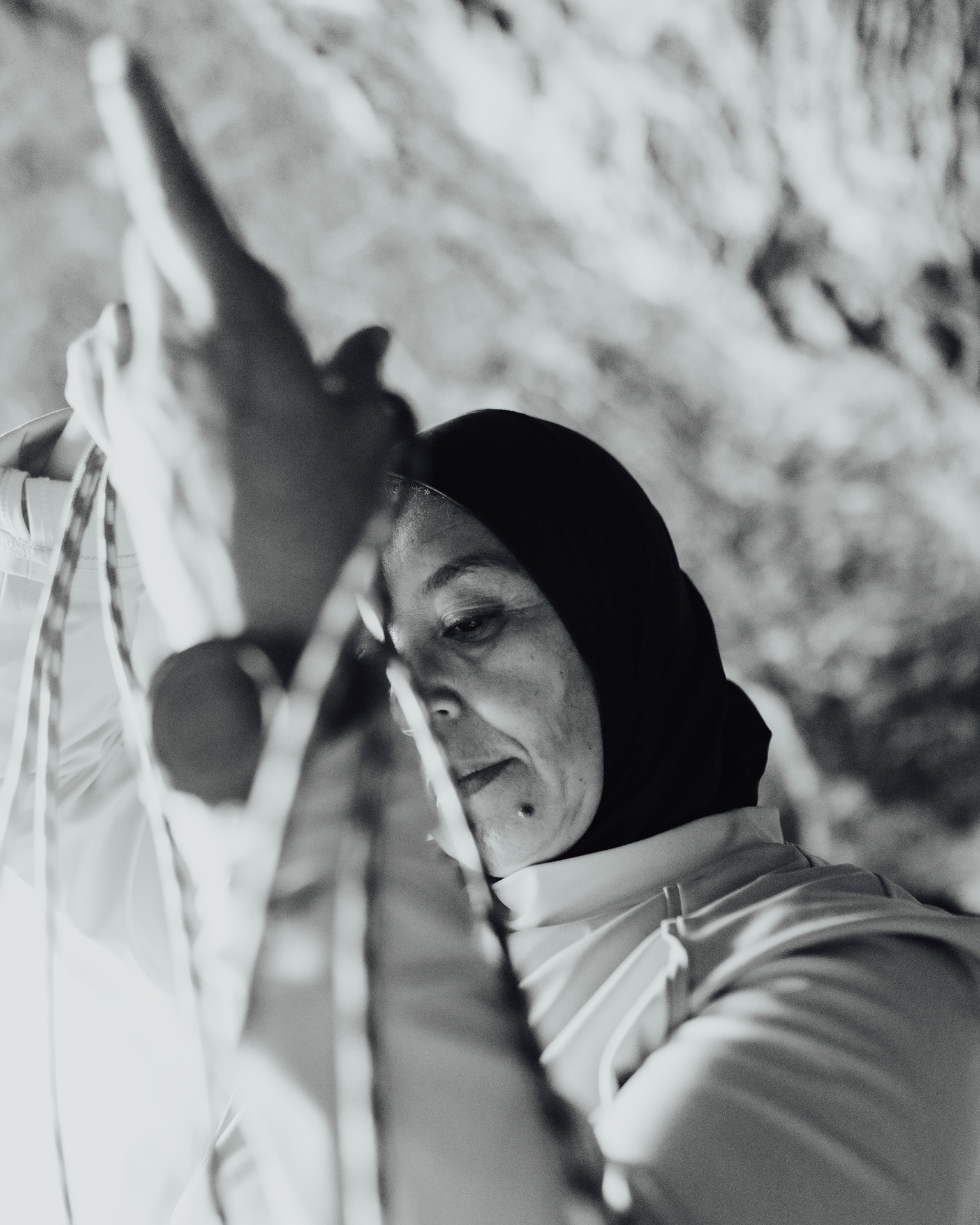
" I BELIEVED IN MYSELF, AND I WORKED IN MY DREAM AND I SUCCEEDED."
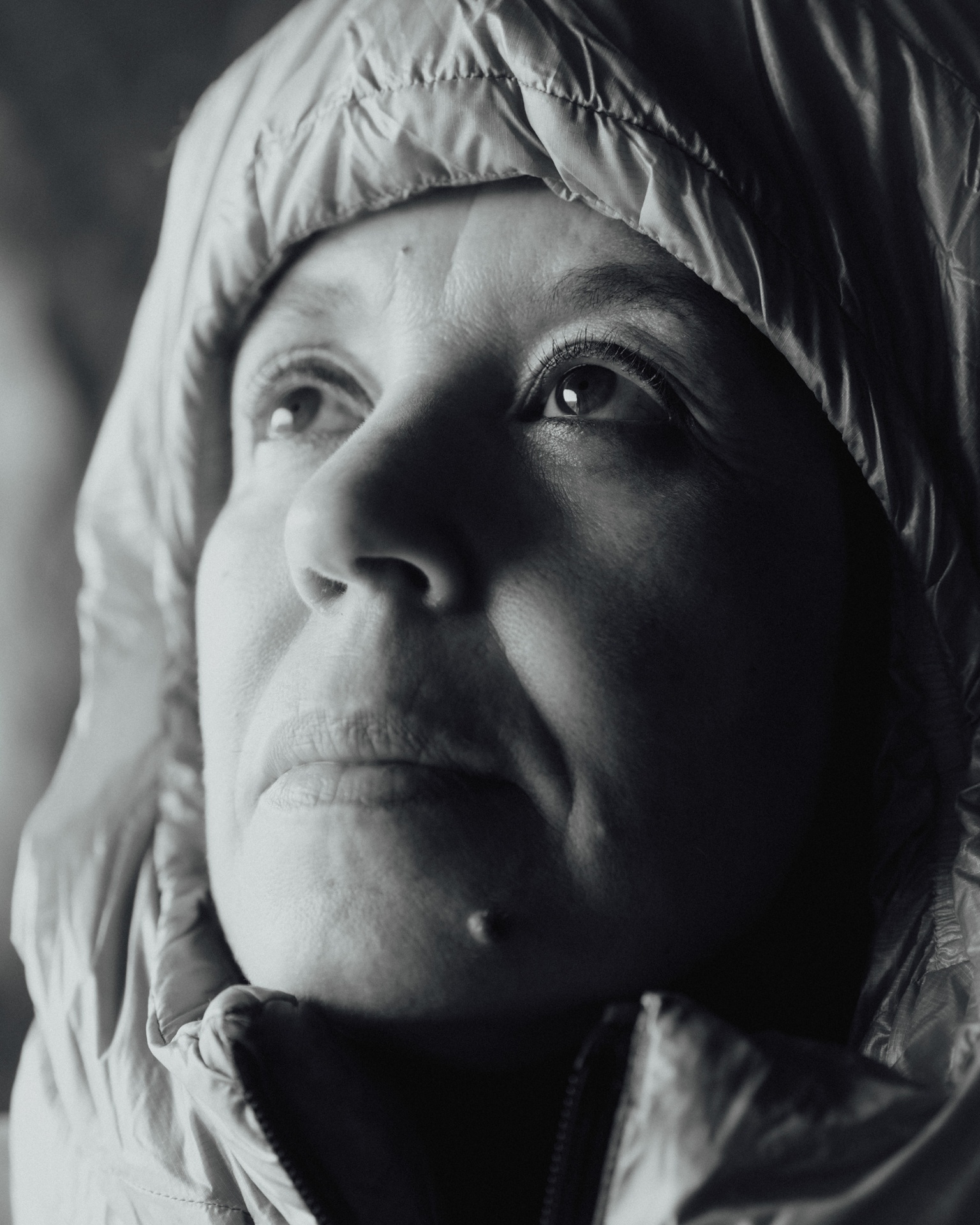
Such techniques are shaped by environments where there is little margin for error. Expeditions can last weeks, often in isolation, with prolonged exposure to storms, avalanches and extreme cold. “Sometimes you are isolated for many days, far from your family, in harsh conditions,” she says. “You have to deal with your emotions, not to be afraid.” The challenge is not simply to endure, but to remain composed enough to make decisions.
Her own experience bears that out. On Everest, she suffered frostbite and snow blindness after removing her goggles, temporarily losing her vision. “Everything was just white,” she recalls. On other climbs, she has faced avalanches and rapidly changing weather conditions that demand immediate judgment. “Sometimes it can be minus 20, minus 30, minus 40,” she says. “You have to be strong and focused.”
More recently, her attempt on K2 ended without a summit. The conditions, she explains, had become dangerously unstable. “The weather was not good. It was a lot too hot. Mini snow melts. So rock fell and it was very, very dangerous.” She intends to return. In her account, failure is neither dramatic nor definitive, but part of the logic of the mountains. “In the mountains you are not sure about nothing,” she says. “You do your best.”
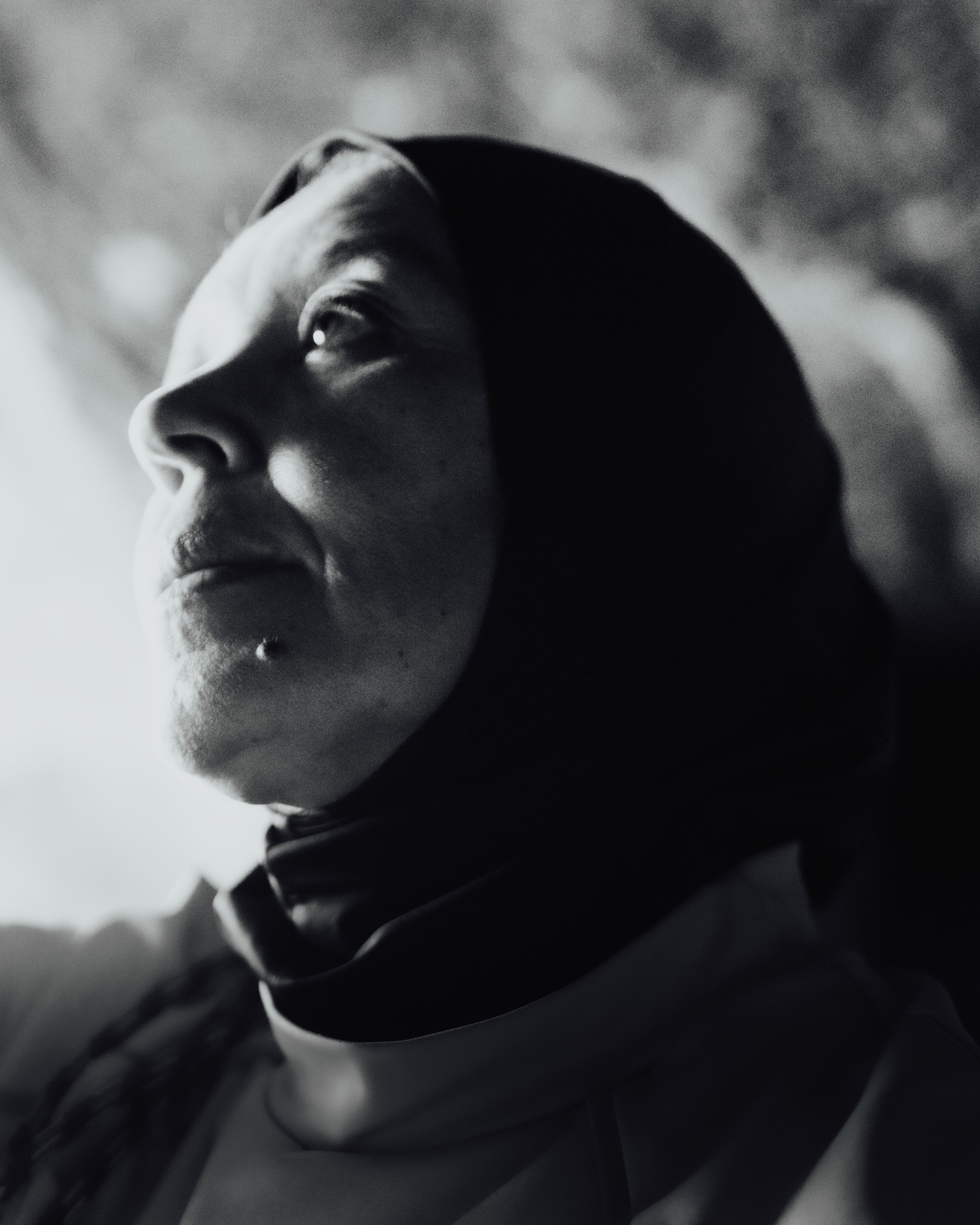
“YOU CAN SUCCEED IN YOUR STUDIES. YOU CAN FIND A JOB. YOU CAN BREAK ALL THE BARRIERS.”
If that outlook reflects resilience, it also reflects a particular kind of leadership — one grounded less in authority than in preparation and awareness. On expeditions, she emphasises, success depends on collective judgement. “The team is very important,” she says. Climbers share information about weather windows, route conditions and risks, often making decisions that affect not just themselves but others on the mountain. “If you have any information, you share it with others,” she explains. “Because to go for the summit, you need to know when it is the best time to go.”
At the same time, there are moments when leadership becomes entirely internal. During summit pushes, climbers often separate, moving at their own pace with a guide ahead. “In that time you are alone with yourself,” she says. “You have to encourage yourself to continue, not to give up.” It is here that preparation is tested most directly, in the ability to sustain focus under fatigue and pressure.
This dual understanding of leadership — collective and individual — now shapes her work beyond climbing. In Morocco, Baibanou runs programmes aimed at empowering young women, combining workshops on confidence, communication and leadership with practical experience in the mountains. The structure is deliberate: progression from theory to practice, from discussion to exposure. “If you can climb Toubkal” — North Africa’s highest peak at 4,167 metres; a physically demanding but accessible two-day trek from Marrakech — “then you can climb any other summits,” she says. “You can succeed in your studies. You can find a job. You can break all the barriers.”
The message is consistent. “I believed in myself, and I worked in my dream and I succeeded,” she says. “So you too, you can believe in you. You can dare to dream.”
For all the emphasis on ambition, there is a notable pragmatism in how she approaches the future. Further expeditions — to K2 again, and potentially other Himalayan peaks — depend on sponsorship and funding as much as preparation. “If I have money, I climb,” she says. “If I don’t, I don’t.” The reality is unvarnished, but it has not altered her trajectory.
What defines Baibanou is not simply that she climbs mountains, but how she does it: with a system built on planning, discipline and repetition, applied in environments where certainty is impossible. “You have to be very focused,” she says. “And to believe you can continue.”
In that sense, the summit is never the full story. The work lies in everything that precedes it — and everything required to come back down.
Seven Summits
At A Glance
The Seven Summits challenge involves climbing the highest mountain on each of the seven continents. It includes Everest in Asia (8,848m), Aconcagua in South America (6,961m), Denali in North America (6,194m), Kilimanjaro in Africa (5,895m), Elbrus in Europe (5,642m), Carstensz Pyramid in Oceania (4,884m) and Vinson in Antarctica (4,892m). Fewer than a thousand climbers are believed to have completed the full list. In 2018, Baibanou became the first Moroccan to complete it.

This feature originally appeared in the pages of the Summer 2026 issue of You Can Now Magazine.