
WHO DO YOU
THINK YOU ARE?
Personality profiling has become a global industry, promising deeper insight into how people think, lead and work together. But how accurate are these tools — and what real value do they offer leaders and teams today?


In the American Midwest, against the backdrop of two world wars, Katharine Cook Briggs and her daughter Isabel Briggs Myers became deeply interested in understanding the differences in human behaviour. Neither had formal training in psychology. They were curious, driven women in a period when opportunities for curious, driven women were limited. Even Isabel’s husband mocked her entrepreneurial ambitions, sarcastically referring to her as “Mrs Executive”.
Fittingly, Isabel later told her mother that if they had invented their type system before they met, she would never have married him. In the language of the Myers-Briggs Type Indicator – the globally recognised tool their work would eventually inspire – she was an INFP. He was an ISTJ. And like the fish and canary in her mother’s favourite fable, they had almost nothing in common.
Katharine’s behavioural laboratory was initially her own family, and later the local families around her who welcomed her interest in behavioural variation. Amid the familiarity and friction of daily life, she found herself wondering why people approached the same world in such fundamentally different ways. Why, for example, does one person feel most comfortable with structure and preparation, while another thrives on flexibility and improvisation? Why are some people energised by busy rooms and constant interaction, while others prefer quieter spaces and time to think?
Then came a serendipitous discovery: the work of Swiss psychologist Carl Jung. In his 1921 book Psychological Types, Jung proposed that these differences were not random, but reflected distinct ways people orient themselves to the world. He described dimensions such as Introversion and Extraversion – whether we are more inwardly or outwardly oriented – alongside Thinking and Feeling, different ways of evaluating and making sense of experience.
Inspired and energised by Jung’s ideas, the mother and daughter set out, from their kitchen-table beginnings, to make his work “eminently useful”.
It was Isabel who ultimately codified her mother’s method for categorising personalities, endlessly prototyping forced-choice questionnaires mapped against their own evolved version of the types and expressed as four-letter outcomes. She died in 1980, just as the test’s popularity was beginning to take off.
Today, around 2.5 million people use the MBTI every year. It is one of many profiling tools, often paid for by employers keen to gain insight into the fit of potential hires or to help existing teams work together more effectively. Personality profiling has become a multi-billion-pound global industry. From factories in Frankfurt to design studios in Shoreditch, the argument is consistent: greater self-awareness of our behaviours and preferences can help us work, communicate and relate to one another more effectively.
“Behaviour is contextual, especially at work.”
But not everyone’s on board. Critics describe these assessments as blunt instruments that flatten human behaviour into oversimplified categories. Many challenge the science behind them, seeing them as little more than workplace horoscopes and pointing to inconsistent results when the same person takes the same test at different times. Others go further, arguing that they reinforce a problematic form of capitalism – one that encourages us to work harder for others at the things supposedly “best suited” to us. To stay in our lanes.
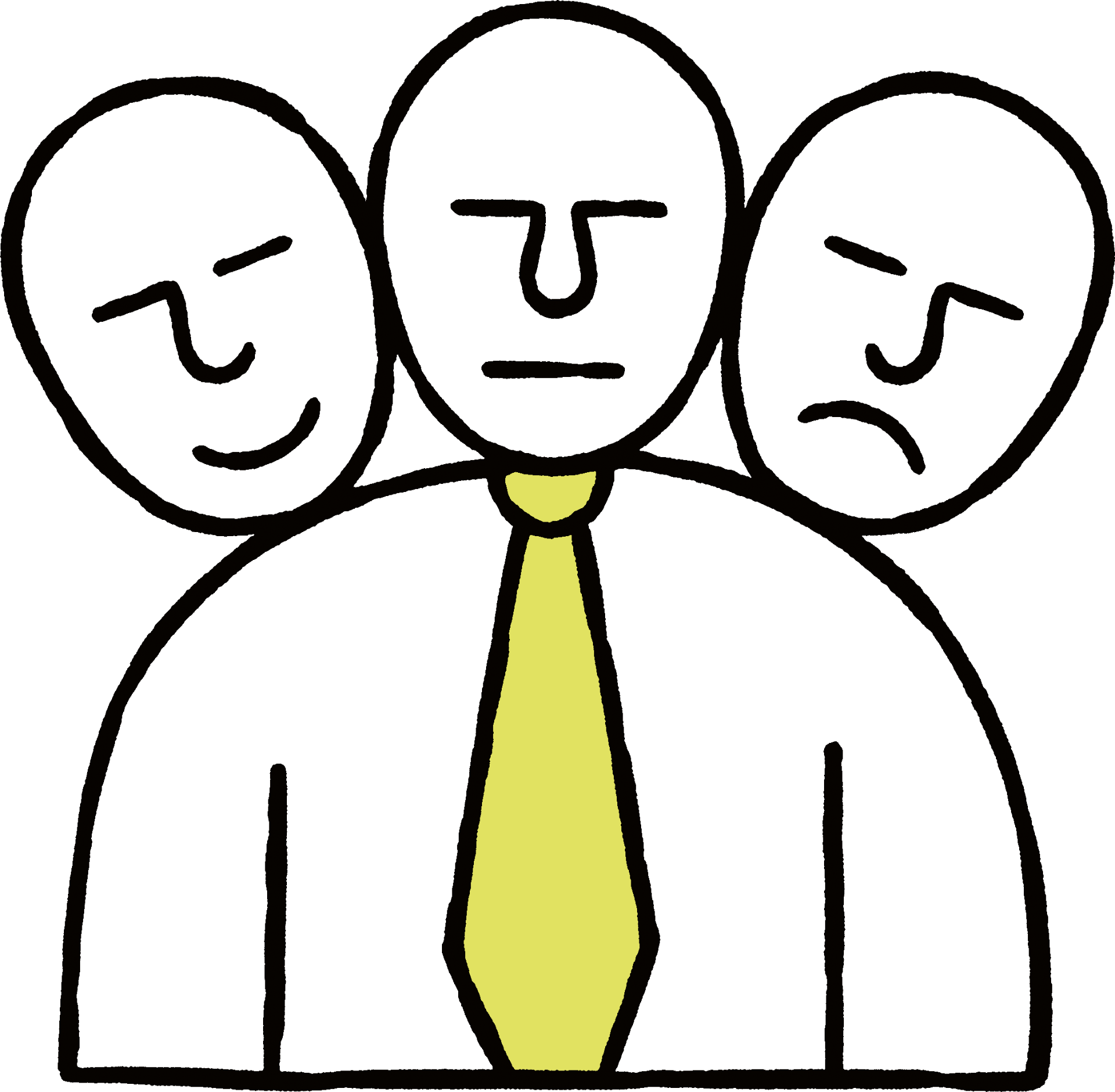
Tools like Myers-Briggs can also unhelpfully encourage us to think in binaries: Intuitive or Sensing, Introverted or Extraverted. Or, in the language of colour-based profilers such as Insights and DISC, “Red” or “Green”. But most of us do not experience ourselves in such fixed terms. We see ourselves more subtly, expressing different behaviours across a spectrum shaped by context, environment and the people around us.
When presented with a forced-choice question asking whether we “bring positive energy into the room”, most of us instinctively think: it depends. Yes, if I’ve slept well. No, if my toxic boss is there. Behaviour is contextual, especially at work.
In our own experience using these tools with leaders and teams across a wide range of workplaces, we’ve found it important to acknowledge their limitations early. While we all have tendencies – and most people recognise genuine strengths in the profiles they receive – behaviour does not happen in a vacuum. We shape and draw out different behaviours in one another. The best leaders not only know how to flex their own style, but also how to create conditions that help others flex theirs when situations demand it.
We find the enduring value lies less in the profile itself and more in the well-facilitated reflection and conversations that follow. That might happen through one-to-one coaching or, more often, in group settings. What do we make of the insights the profile offers? What resonates? What would we challenge – and why? What do we see in others that they may not see in themselves? And how might we adapt the way we show up to better anticipate what others need from us?
Answered well, these questions can lead to immediate action and relationship-saving shifts in fast-moving teams.
One thing unavailable to Katharine and Isabel – and which may well have accelerated their work – was AI. Out of curiosity, I recently asked ChatGPT to predict my Myers-Briggs profile based on a couple of years of interactions. It was eerily close to my actual result (ENFP), complete with a convincing rationale and reflection questions to consider.
It left me wondering what might come next. What will these systems infer when I give them access to my emails or invite them to observe and listen in on team meetings? For me, that feels both unsettling and unnecessary. Like many of the lengthy reports generated by profiling tools today, it risks becoming too much information.
Whatever high-tech tool we use, and whichever behavioural box it places us in, the real value will still lie in the simple, deeply human conversations and questions that follow. Now what?
Bio: Nick Defty is the founder and director of YCN. Through development programmes, tools and communities, he works with organisations to develop more capable, confident and human leaders.